
[แปลไทยด้านล่าง]
When people think of “tasting,” they often imagine a sommelier in a suit, swirling a glass and using fancy words. But tasting sake doesn’t have to be serious or stuffy.
As a Sommelier, my goal isn’t to make you memorize chemical compounds; it’s to help you unlock flavors you might be missing. Sake is unique because it combines the fruity aromatics of wine with the savory depth of beer.
Here is my simple 4-step guide to tasting sake better.
1. The Vessel Matters
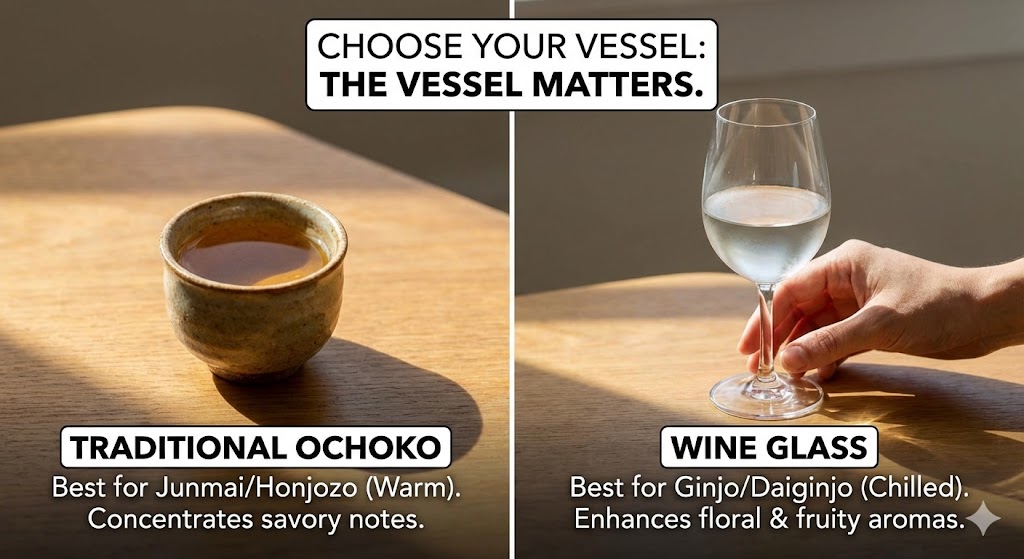
Before you pour, choose your weapon.
- Traditional Ochoko (Small Ceramic Cup): Best for Junmai or Honjozo, especially if serving warm. The narrow opening concentrates the savory notes.
- Wine Glass: Best for Ginjo and Daiginjo. The wider bowl allows the delicate floral and fruity aromas to collect and reach your nose. If you are drinking premium sake, ditch the tiny cup and grab a white wine glass!
2. Check the Temperature
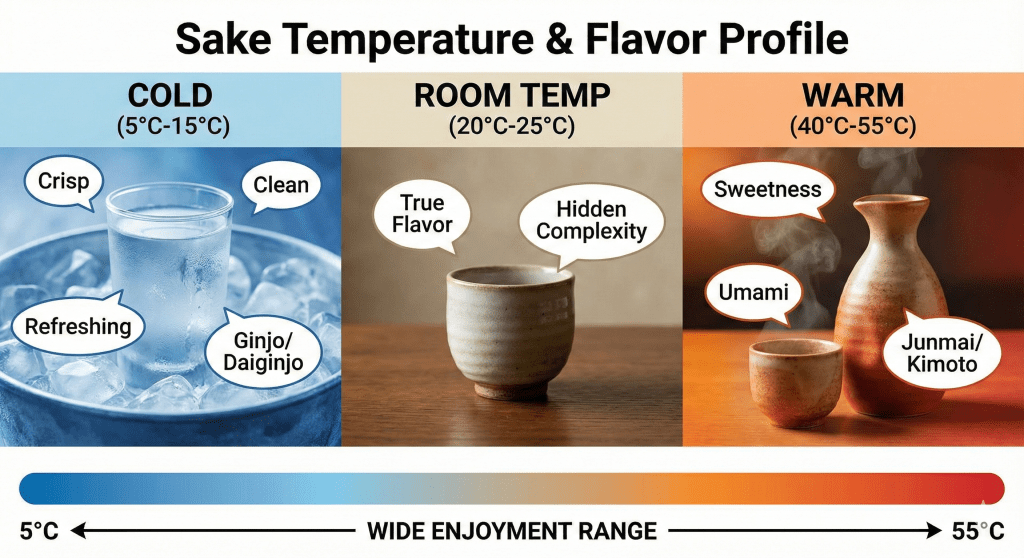
Sake is the only alcohol in the world commonly enjoyed across such a wide temperature range (from 5°C to 55°C!).
- Cold: Makes sake taste crisp, clean, and refreshing. (Good for Ginjo/Daiginjo).
- Room Temp: The “true” flavor. If a sake is too cold, the flavors “close up.” Letting it warm slightly can reveal hidden complexity.
- Warm: Brings out sweetness and Umami. (Great for Junmai/Kimoto).
3. The Tasting Ritual: Look, Smell, Taste
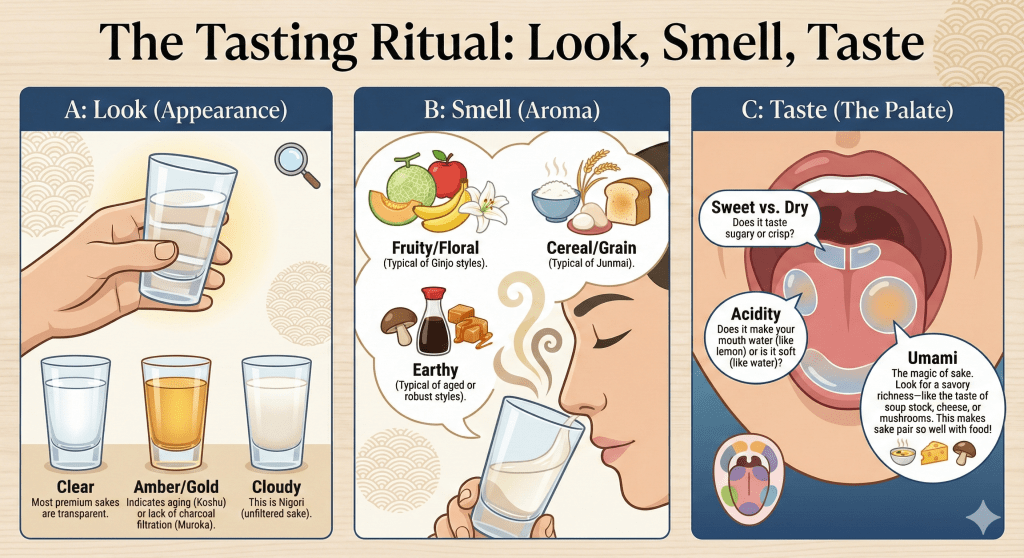
Step A: Look (Appearance) Hold the glass up to the light.
- Clear: Most premium sakes are transparent.
- Amber/Gold: Often indicates aging (Koshu) or a lack of charcoal filtration (Muroka).
- Cloudy: This is Nigori (unfiltered sake).
Step B: Smell (Aroma) Stick your nose right in the glass! What do you find?
- Fruity/Floral: Apple, melon, banana, lily? (Typical of Ginjo styles).
- Cereal/Grain: Rice porridge, mochi, toasted bread? (Typical of Junmai).
- Earthy: Mushroom, soy sauce, caramel? (Typical of aged or robust styles).
Step C: Taste (The Palate) Take a sip and let it coat your entire tongue. Don’t swallow immediately. Look for:
- Sweet vs. Dry: Does it taste sugary or crisp?
- Acidity: Does it make your mouth water (like lemon) or is it soft (like water)?
- Umami: This is the magic of sake. Look for a savory richness—like the taste of soup stock, cheese, or mushrooms. This is what makes sake pair so well with food!
4. The Finish (Kire)
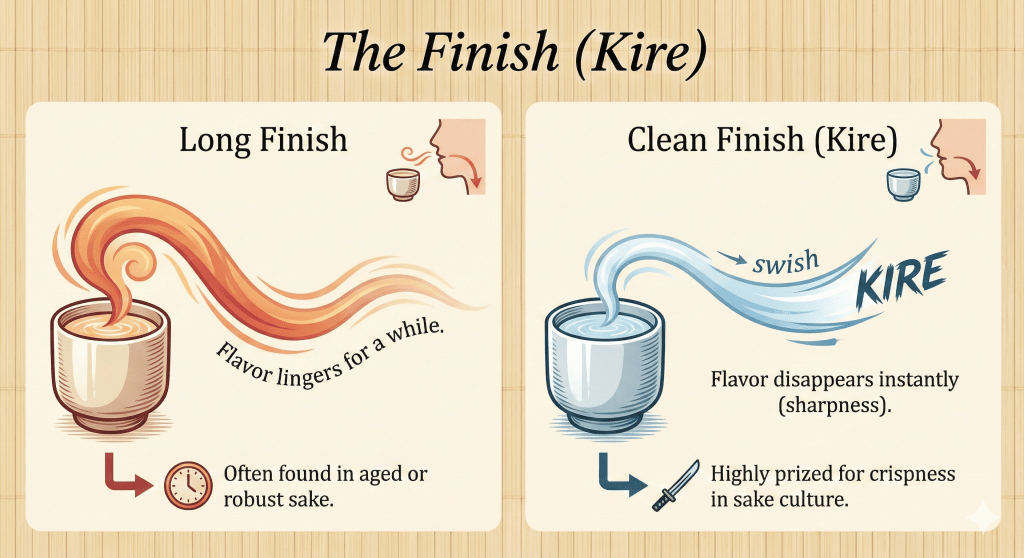
After you swallow, does the flavor linger (a long finish), or does it disappear instantly (a clean finish)? A crisp, clean disappearance is often described as Kire (sharpness), which is highly prized in sake culture.
————————————-
ชิมสาเกให้เหมือนมือโปร (ง่ายกว่าที่คิดเยอะ!)
เวลาพูดถึงการ “ชิมไวน์หรือสาเก” หลายคนมักนึกภาพซอมเมอลิเยร์ใส่สูท หมุนแก้วไปมา แล้วพูดคำศัพท์ยากๆ ใช่ไหม? แต่จริงๆ แล้วการชิมสาเกไม่ได้เป็นเรื่องเครียดขนาดนั้น
ในฐานะซอมเมอลิเยร์ หน้าที่ของเราไม่ใช่การให้คุณจำชื่อสารเคมี แต่คือการช่วยให้คุณ “ไขรหัสความอร่อย” ที่ซ่อนอยู่ในแก้วออกมา สาเกมีความพิเศษตรงที่มันรวมเอาความหอมหวานของไวน์ และความกลมกล่อม (Savory) ของเบียร์เข้าไว้ด้วยกัน
นี่คือเคล็ดลับ 4 ขั้นตอนง่ายๆ ที่จะทำให้สาเกแก้วต่อไปของคุณอร่อยขึ้น
1. เลือกแก้วให้ถูก (The Vessel)
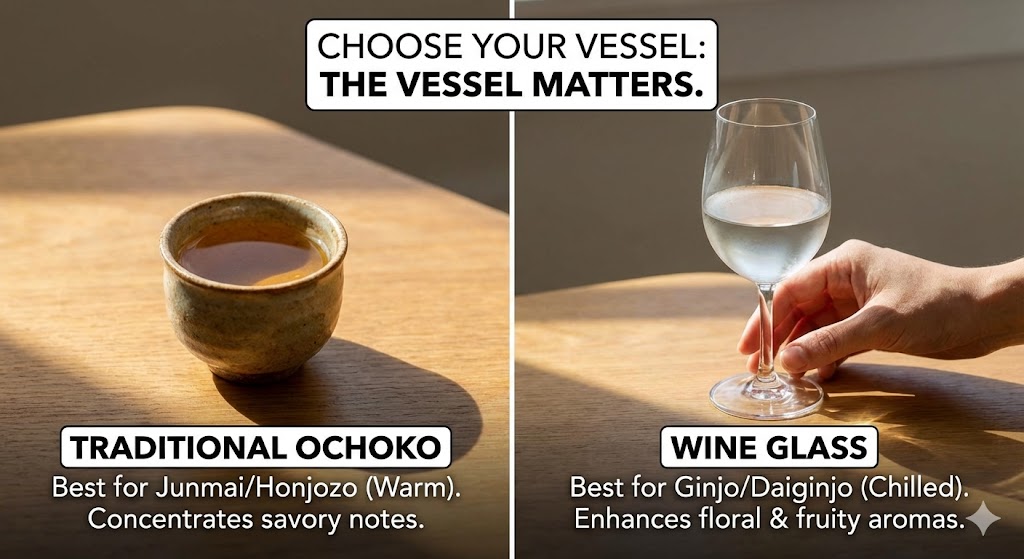
ก่อนจะริน ต้องเลือกอาวุธคู่กายก่อน
- จอกโอโชโกะ (Ochoko): จอกเซรามิกใบเล็ก เหมาะกับสาเกกลุ่ม Junmai หรือ Honjozo โดยเฉพาะถ้าดื่มแบบอุ่น ทรงที่แคบจะช่วยเน้นรสชาติที่หนักแน่น
- แก้วไวน์ (Wine Glass): เหมาะที่สุดสำหรับ Ginjo และ Daiginjo ปากแก้วที่กว้างจะช่วยกักเก็บกลิ่นหอมของผลไม้และดอกไม้ให้ลอยมาแตะจมูกเรา ถ้าคุณดื่มสาเกเกรดพรีเมียม วางจอกใบเล็กไว้ก่อนแล้วหยิบแก้วไวน์ขาวมาใช้แทน!
2. อุณหภูมิเปลี่ยน รสชาติเปลี่ยน
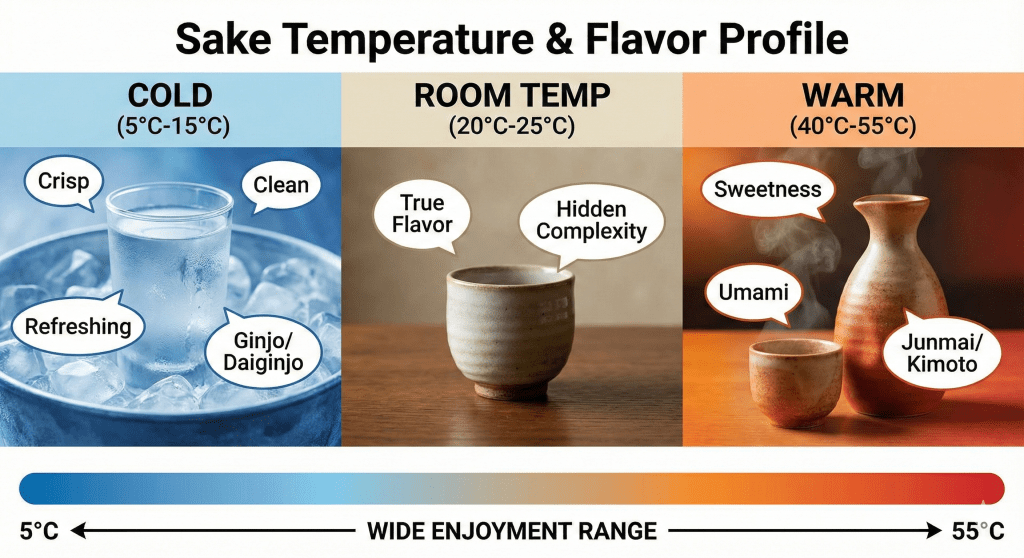
สาเกเป็นเครื่องดื่มแอลกอฮอล์ชนิดเดียวในโลกที่ดื่มอร่อยได้ตั้งแต่อุณหภูมิ 5°C ไปจนถึง 55°C!
- เย็นเจี๊ยบ: ให้รสชาติที่กรอบ สดชื่น และสะอาด (เหมาะกับ Ginjo/Daiginjo)
- อุณหภูมิห้อง: คือรสชาติที่ “แท้จริง” บางครั้งถ้าเย็นเกินไป กลิ่นจะถูกปิดกั้น ลองทิ้งไว้ให้หายเย็นสักนิด รสชาติที่ซ่อนอยู่จะเผยออกมา
- อุ่นร้อน: จะช่วยดึงความหวานและรสอูมามิออกมา (เหมาะกับ Junmai หรือ Kimoto)
3. ขั้นตอนการชิม: ดู ดม อม กลืน
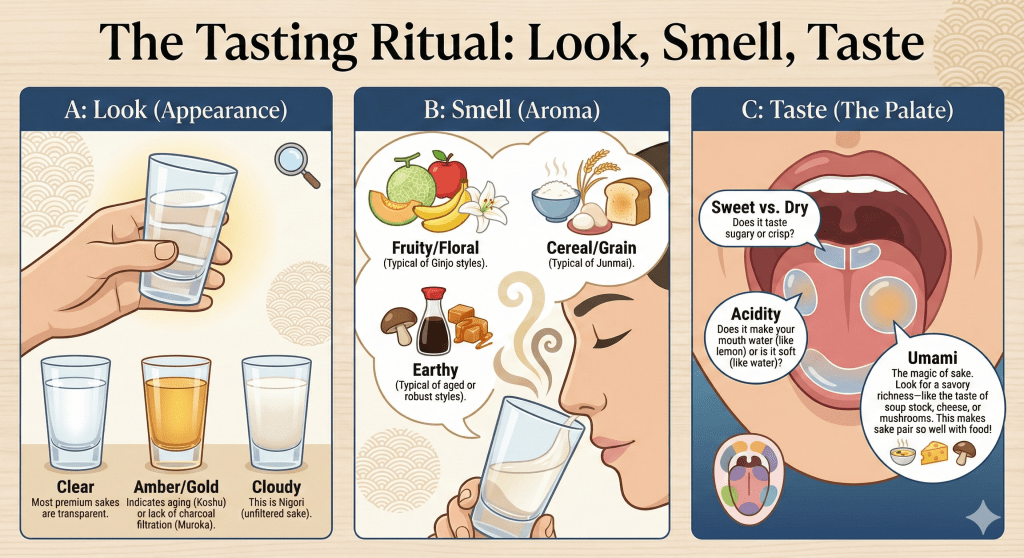
A: ดู (Appearance) ยกแก้วขึ้นส่องกับแสงไฟ
- ใสแจ๋ว: สาเกพรีเมียมส่วนใหญ่จะใสสะอาด
- สีทอง/อำพัน: มักจะหมายถึงสาเกที่ผ่านการบ่ม (Koshu) หรือไม่ผ่านการกรองถ่าน (Muroka)
- ขุ่น: นี่คือ Nigori (สาเกที่มีตะกอนข้าวผสมอยู่)
B: ดม (Aroma) ยื่นจมูกเข้าไปในแก้วเลย คุณได้กลิ่นอะไรบ้าง?
- ผลไม้/ดอกไม้: แอปเปิ้ล เมล่อน กล้วย? (มักเจอในกลุ่ม Ginjo)
- ธัญพืช/ข้าว: ข้าวต้ม โมจิ ขนมปังปิ้ง? (มักเจอในกลุ่ม Junmai)
- กลิ่นดิน: เห็ด ซีอิ๊ว คาราเมล? (มักเจอในสาเกบ่มหรือสาเกรสเข้ม)
C: ชิม (Taste) จิบแล้วอมไว้ ให้รสกระจายทั่วลิ้น อย่าเพิ่งรีบกลืน ลองสังเกตสิ่งเหล่านี้:
- หวาน vs แห้ง: รสเหมือนน้ำตาลหรือแห้งผาก?
- ความเปรี้ยว (Acidity): ดื่มแล้วน้ำลายสอ (เหมือนมะนาว) หรือนุ่มนวล (เหมือนน้ำเปล่า)?
- อูมามิ (Umami): นี่คือเวทมนตร์ของสาเกค่ะ ลองหารส “นัว” หรือรสกลมกล่อม คล้ายๆ กับน้ำซุป ชีส หรือเห็ด รสนี้แหละค่ะที่ทำให้สาเกกินกับอาหารอร่อยมาก!
4. รสสัมผัสหลังดื่ม (The Finish)
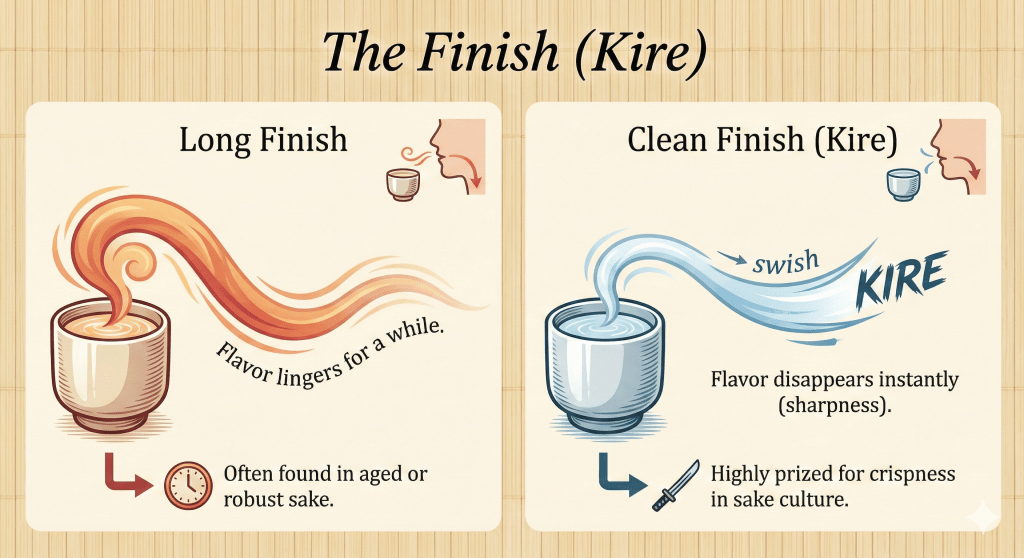
หลังจากกลืนลงคอไปแล้ว รสชาติยังค้างอยู่ในปากนานไหม? หรือหายวับไปทันที? ถ้าหายไปอย่างรวดเร็วและสะอาดเกลี้ยงเกลา ชาวญี่ปุ่นเรียกว่า “คิเระ” (Kire) หรือความคม ซึ่งถือเป็นเสน่ห์อย่างหนึ่งของสาเก
 SAKE SERIES