
[แปลไทยด้านล่าง]
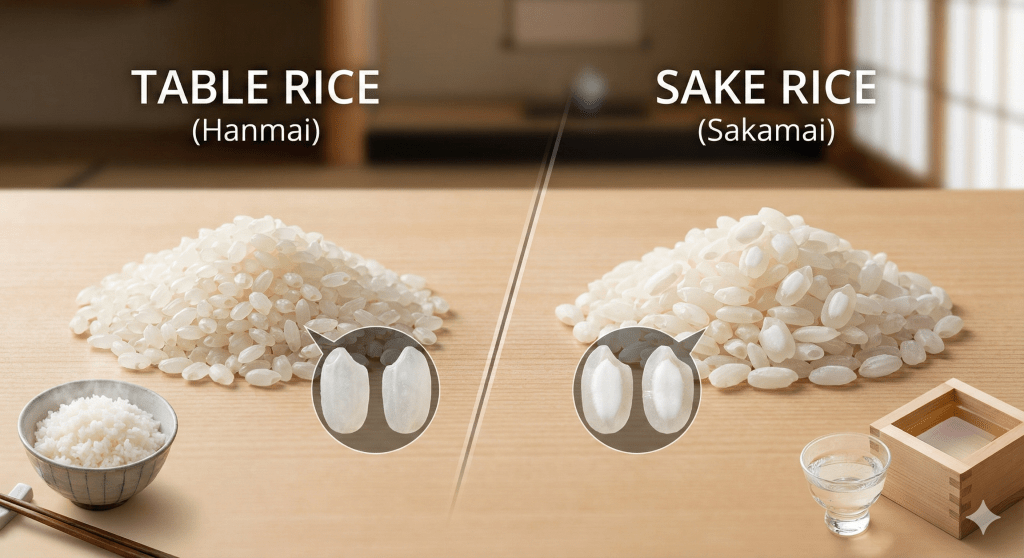
Rice is rice, right? Not exactly.
Just as winemakers would never use supermarket table grapes to make a fine Cabernet Sauvignon, sake brewers do not use standard table rice to make premium Ginjo or Daiginjo.
While it is technically possible to brew sake with the rice you eat for dinner (and many standard sakes are made this way!), premium sake requires a special category of rice known as Saka-mai (酒米) or “Brewer’s Rice.”
Here is why they are different.
1. The “Shinpaku”: The Starchy Heart
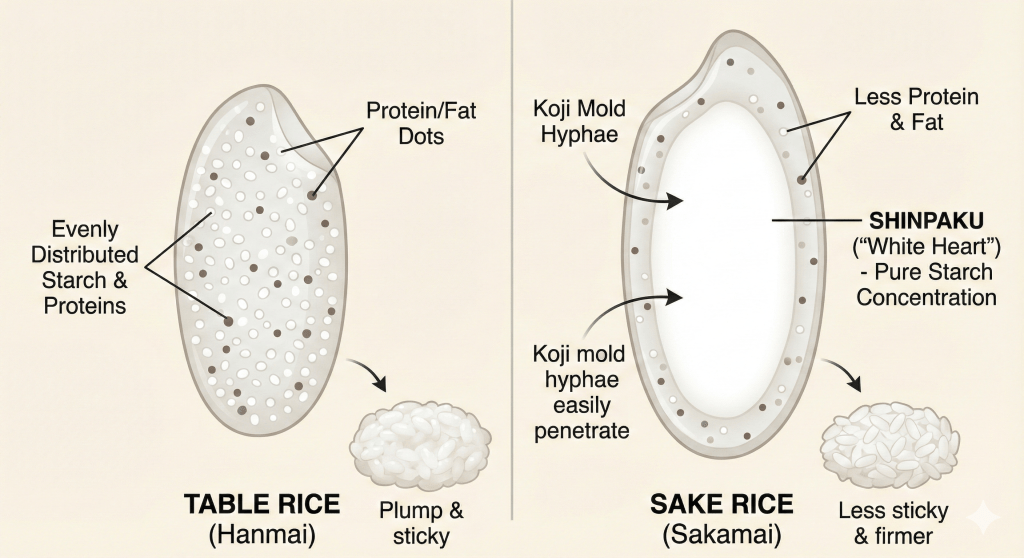
The biggest difference lies inside the grain.
- Table Rice (Hanmai): If you look at a grain of sushi rice, the starch and proteins are distributed evenly throughout the grain. It is designed to stay plump and sticky when cooked.
- Sake Rice (Sakamai): Sake rice has a unique opaque white center called the Shinpaku (心白) or “White Heart.” This is a concentration of pure starch with very little protein or fat. This structure allows the Koji mold to easily penetrate the center of the grain, which is essential for fermentation.
2. Size Matters
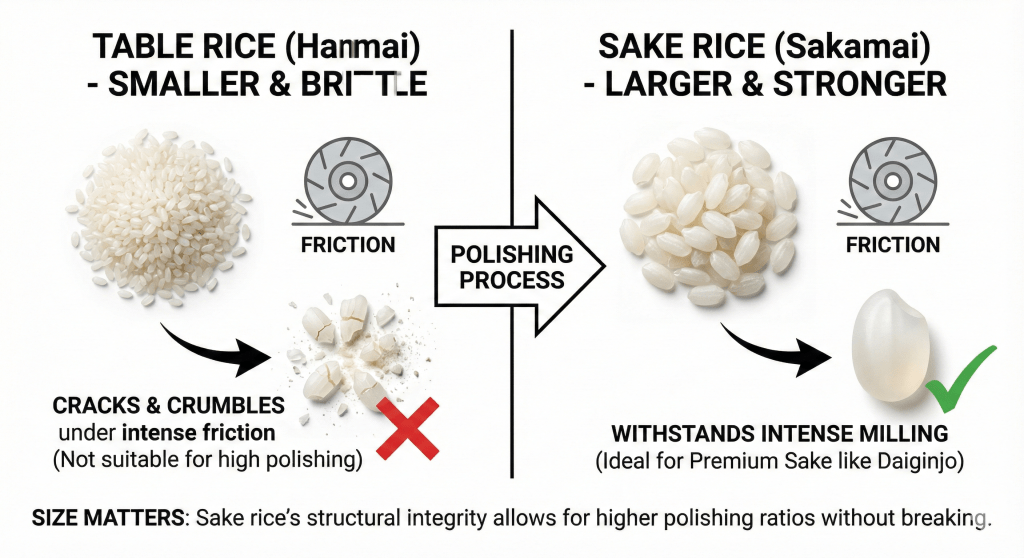
Sake rice grains are significantly larger and stronger than table rice. Why does this matter? Because of Polishing. To make premium sake, we must polish away the outer layers of the rice. Table rice is too small and brittle; if you tried to polish it down to 50% (for Daiginjo), it would likely crack or crumble under the friction. Sake rice is tough enough to withstand this intense milling process.
3. Low Protein and Fat
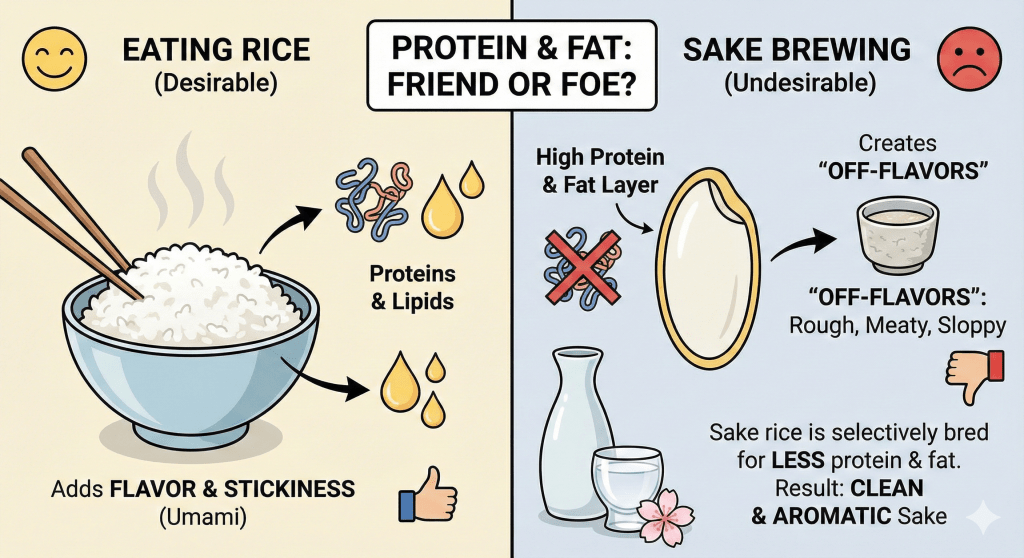
When eating rice, we want proteins and lipids (fats) because they add flavor and stickiness (Umami). However, in sake brewing, too much protein and fat can be the enemy. They can create “off-flavors” described as rough, meaty, or sloppy. Sake rice is selectively bred to have less protein and fat on the outside, ensuring the resulting sake is clean and aromatic.
4. The Price Tag
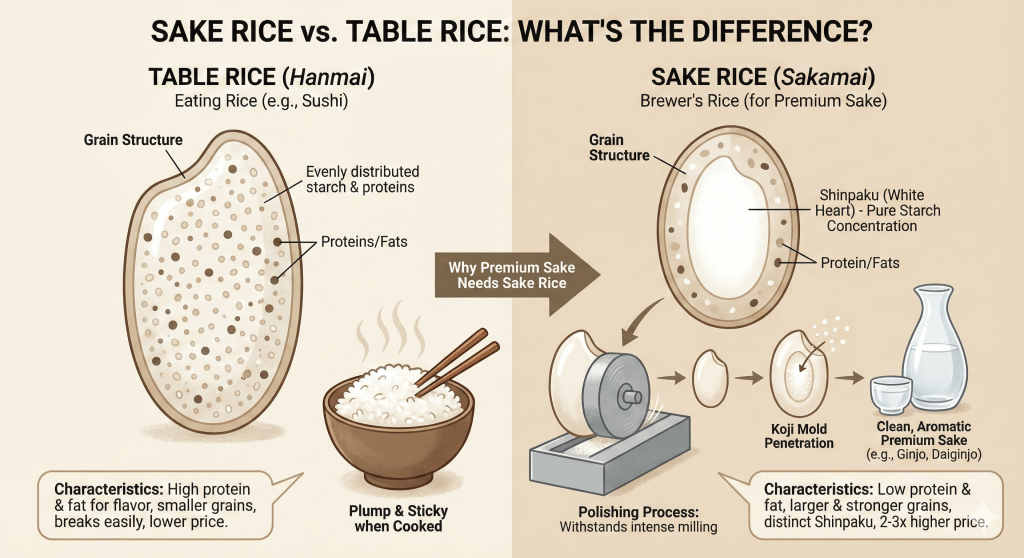
Growing sake rice is difficult. The stalks are taller and heavier (due to the large grains), making them easily knocked over by typhoons or strong winds. It is harder to farm and yields less crop per acre. As a result, premium sake rice like Yamada Nishiki can cost 2-3 times more than high-quality table rice!
Can you eat Sake Rice?
Yes, you can cook it and eat it. However, it probably won’t impress you. Because it has less stickiness and a different texture, it tends to be dry and crumbly compared to the fluffy, sticky rice we love with Japanese food.
ข้าวสาเก vs. ข้าวสวย: ทำไมเราถึงเอาข้าวซูชิมาทำสาเกไม่ได้?
ข้าวก็คือข้าว… จริงเหรอ? ไม่ถูกต้องซะทีเดียว
เช่นเดียวกับที่คนทำไวน์ไม่มีทางใช้องุ่นทานเล่นในซูเปอร์มาร์เก็ตมาทำไวน์แดงชั้นเลิศ คนทำสาเกก็ไม่ใช้ข้าวสวยปกติมาทำสาเกเกรดพรีเมียมอย่างกินโจหรือไดกินโจเช่นกัน
แม้ว่าในทางเทคนิคแล้วเรา สามารถ ทำสาเกจากข้าวที่เราทานเป็นอาหารเย็นได้ (และสาเกราคาถูกหลายตัวก็ทำแบบนั้น!) แต่สำหรับสาเกพรีเมียมแล้ว จำเป็นต้องใช้ข้าวประเภทพิเศษที่เรียกว่า ซากะไม (Saka-mai – 酒米) หรือ “ข้าวสำหรับทำสาเก” เท่านั้น
มาดูกันว่ามันต่างกันอย่างไร:
1. “ชินปาคุ” (Shinpaku): หัวใจแป้งสีขาว
ความแตกต่างที่ใหญ่ที่สุดอยู่ภายในเมล็ดข้าว
- ข้าวสวย (Hanmai): ถ้าคุณดูเมล็ดข้าวซูชิ แป้งและโปรตีนจะกระจายตัวอยู่ทั่วเมล็ด ข้าวแบบนี้ถูกออกแบบมาให้นุ่มและเหนียวเมื่อหุงสุก
- ข้าวสาเก (Sakamai): ข้าวสาเกจะมีจุดสีขาวขุ่นอยู่ตรงกลางเมล็ด เรียกว่า ชินปาคุ (Shinpaku – 心白) หรือ “หัวใจสีขาว” มันคือก้อนแป้งบริสุทธิ์ที่มีโปรตีนและไขมันเจือปนน้อยมาก โครงสร้างแบบนี้ช่วยให้เชื้อราโคจิเจาะเข้าไปทำงานที่แกนกลางเมล็ดได้ง่าย ซึ่งสำคัญมากต่อการหมัก
2. ขนาดที่ใหญ่กว่า
เมล็ดข้าวสาเกมีขนาดใหญ่และแข็งแรงกว่าข้าวสวยอย่างเห็นได้ชัด ทำไมถึงสำคัญ? เพราะ การขัดสี (Polishing) ค่ะ การทำสาเกพรีเมียม เราต้องขัดผิวนอกของข้าวออกไป ข้าวสวยปกตินั้นเล็กและเปราะบางเกินไป ถ้าเราพยายามขัดมันออกถึง 50% (เพื่อทำไดกินโจ) มันจะแตกหักละเอียดไปก่อน แต่ข้าวสาเกนั้นแข็งแกร่งพอที่จะทนต่อแรงเสียดสีมหาศาลนี้ได้
3. โปรตีนและไขมันต่ำ
เวลาเราทานข้าว เราต้องการโปรตีนและไขมันเพราะมันช่วยให้ข้าวอร่อยและเหนียวนุ่ม (รสอูมามิ) แต่สำหรับการทำสาเก โปรตีนและไขมันคือศัตรูค่ะ! สารพวกนี้ทำให้สาเกมีรสชาติ “รก” (Rough) หรือมีกลิ่นตุๆ ข้าวสาเกจึงถูกพัฒนาสายพันธุ์มาให้มีโปรตีนและไขมันต่ำ เพื่อให้ได้สาเกที่รสชาติคลีนและหอมหวน
4. ราคาที่ต่างกัน
การปลูกข้าวสาเกนั้นยากมาก ต้นข้าวจะสูงและรวงข้าวจะหนัก (เพราะเมล็ดใหญ่) ทำให้ต้นข้าวล้มง่ายมากเมื่อเจอลมพายุ มันดูแลรักษายากและให้ผลผลิตต่อไร่น้อยกว่าข้าวปกติ ด้วยเหตุนี้ ข้าวสาเกเกรดท็อปอย่าง ยามาดะ นิชิกิ (Yamada Nishiki) จึงมีราคาแพงกว่าข้าวสวยเกรดดีถึง 2-3 เท่า เลยทีเดียว!
เราหุงข้าวสาเกทานได้ไหม?
ทานได้ค่ะ แต่ไม่อร่อยหรอก เพราะมันมีความเหนียวน้อยกว่าและเนื้อสัมผัสร่วนๆ แห้งๆ ไม่นุ่มฟูเหมือนข้าวญี่ปุ่นที่เราทานคู่กับอาหาร
 SAKE SERIES