
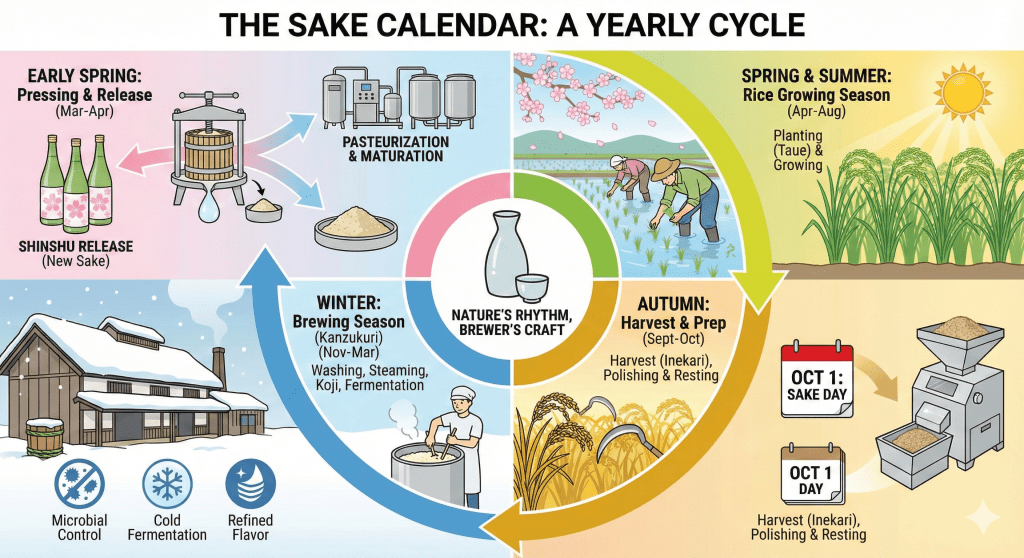
Have you ever noticed that sake bottles often have a manufacturing date? Unlike wine, which is defined by the “vintage” of the grape harvest, sake is defined by the Brewing Year (BY).
Sake production is a cycle that is deeply connected to the rhythm of nature. While huge industrial factories can brew year-round using air conditioning, premium craft sake (Jizake) still follows the traditional agricultural calendar.
Here is what happens from the rice paddy to your glass.
1. Spring & Summer: The Rice Growing Season
- Action: Planting & Growing
- Timeline: April – August
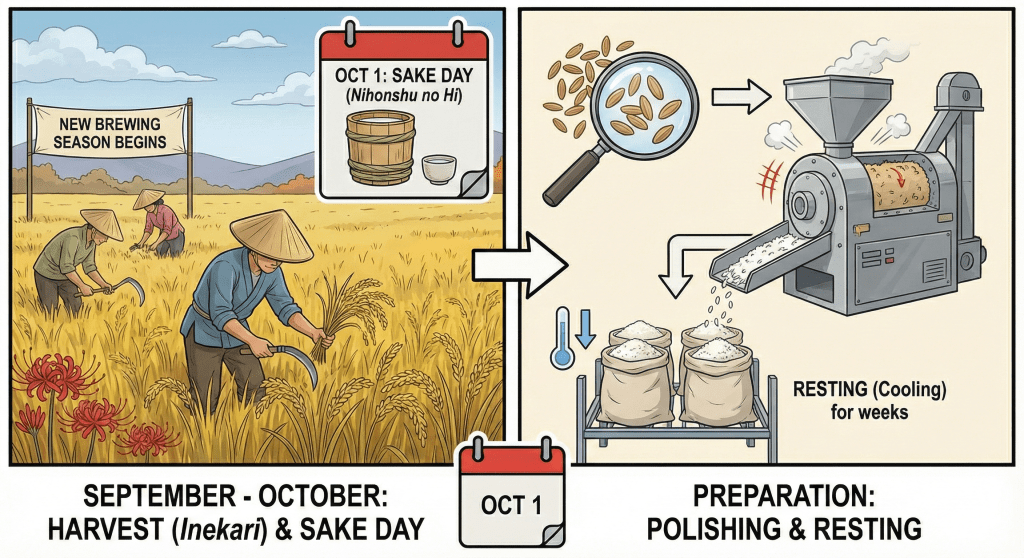
Everything starts in the fields. Just like wine starts in the vineyard, sake starts in the paddy.
- April – May: The rice seedlings are planted (Taue).
- June – August: The rice grows during the hot, humid Japanese summer.
- What are the brewers doing? Interestingly, in traditional breweries, the brewers (Kurabito) are often farmers during the summer! The brewery itself is usually quiet, undergoing deep cleaning and equipment maintenance to prepare for the coming winter.
2. Autumn: Harvest & The “Sake New Year”
- Action: Harvesting & Polishing
- Timeline: September – October
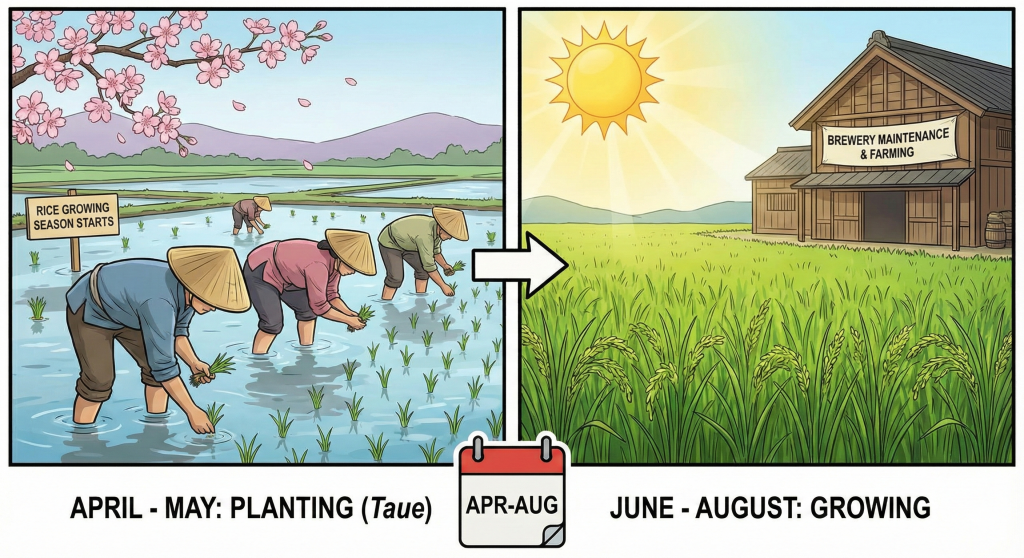
As the weather cools, the rice turns golden and is harvested (Inekari).
- October 1st: This is “Sake Day” (Nihonshu no Hi) in Japan. It marks the traditional beginning of the new brewing season.
- Preparation: Once harvested, the brown rice must be inspected and then sent to be polished (milled) to remove the outer layers. The polished rice then needs to rest for a few weeks to cool down from the friction of milling before it can be used.
3. Winter: The Brewing Season (Kanzukuri)
- Action: Washing, Steaming, Koji Making, Fermentation
- Timeline: November – March
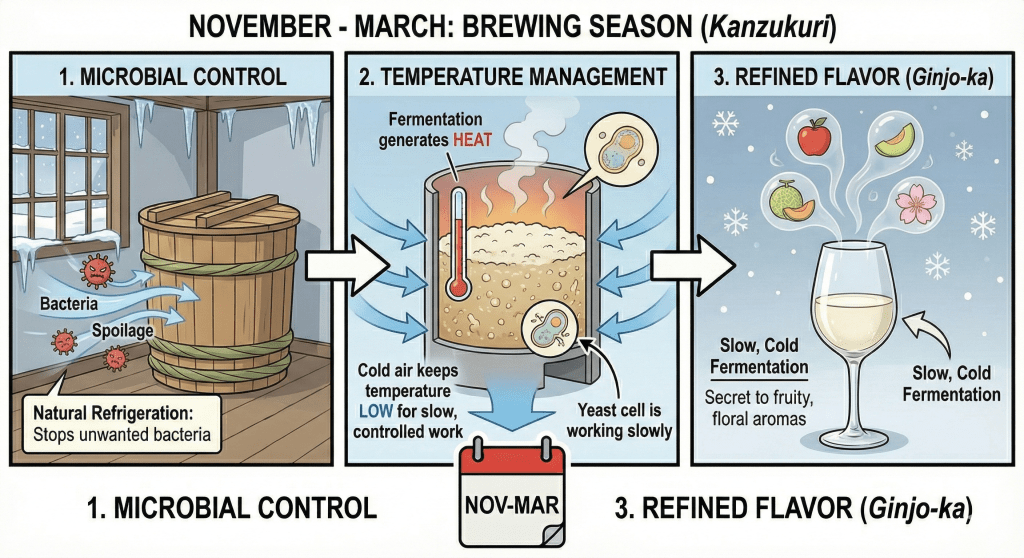
This is the most critical time. This practice is called “Kanzukuri” (Cold Brewing).
Why is sake brewed in winter? You might wonder, why work in the freezing cold? There are three scientific reasons:
- Microbial Control: The cold air acts as natural refrigeration, stopping unwanted bacteria from spoiling the batch.
- Temperature Management: Fermentation generates heat. If the mash gets too hot, the yeast works too fast, producing rough flavors. The cold air helps brewers keep the temperature low, allowing the yeast to work slowly.
- Refined Flavor: This slow, cold fermentation is the secret to creating the fruity, floral aromas (Ginjo-ka) found in premium sake.
4. Early Spring: Pressing & Release
- Action: Pressing, Pasteurization, Storage
- Timeline: March – April
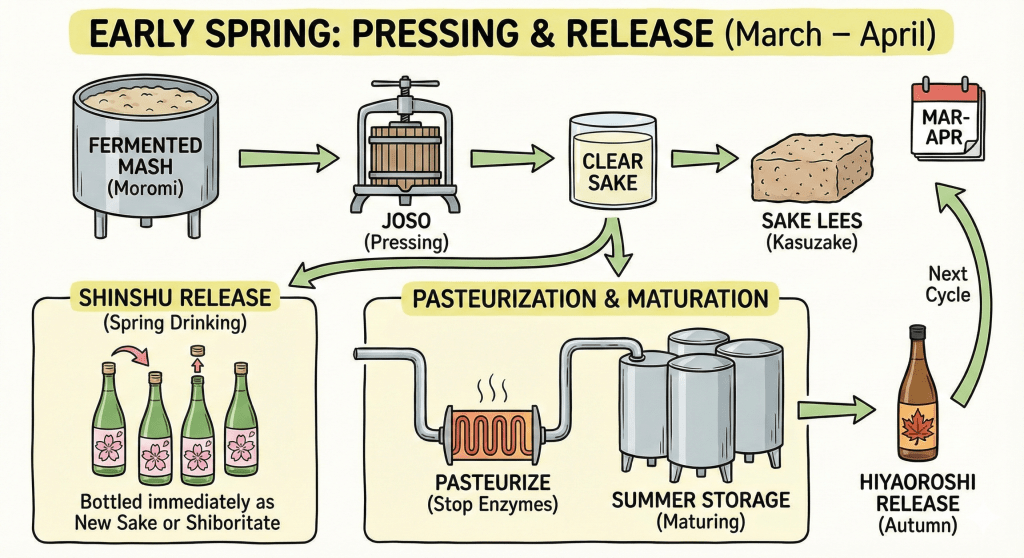
As winter ends, the fermentation finishes. The mash is pressed (Joso) to separate the clear sake from the rice lees (Kasuzake).
Pasteurization & Maturation: Most sake is pasteurized (heated to stop enzymes) and put into storage tanks to mature over the summer, waiting to be released as “Hiyaoroshi” in the autumn, completing the cycle.
Shinshu Release: Some sake is bottled immediately as “Shinshu” (New Sake) or “Shiboritate” for immediate spring drinking.
ปฏิทินแห่งสาเก: วงจรชีวิต 1 ปีในโรงหมัก (Sake Calendar)
คุณเคยสังเกตไหมว่าบนขวดสาเกจะมีวันที่ผลิตระบุอยู่? ไม่เหมือนกับไวน์ที่นับปีตามการเก็บเกี่ยวองุ่น (Vintage) แต่สาเกจะนับปีตาม “ปีการผลิต” (Brewing Year หรือ BY)
การผลิตสาเกเป็นวงจรที่ผูกพันกับจังหวะของธรรมชาติอย่างลึกซึ้ง แม้ว่าโรงงานอุตสาหกรรมขนาดใหญ่จะสามารถผลิตสาเกได้ตลอดทั้งปีโดยใช้เครื่องปรับอากาศ แต่สำหรับสาเกคราฟต์เกรดพรีเมียม (Jizake) นั้น ส่วนใหญ่ยังคงยึดตามปฏิทินการเกษตรแบบดั้งเดิม
เรามาดูกันว่า จากรวงข้าวในนา มาสู่แก้วในมือคุณ มีขั้นตอนอะไรบ้างในแต่ละฤดู
1. ฤดูใบไม้ผลิ & ฤดูร้อน: ฤดูกาลแห่งการเพาะปลูก
- กิจกรรม: ปลูกข้าวและดูแลรักษา
- ช่วงเวลา: เมษายน – สิงหาคม
ทุกอย่างเริ่มต้นที่ท้องทุ่ง เช่นเดียวกับที่ไวน์เริ่มที่ไร่องุ่น สาเกก็เริ่มที่นาข้าว
- เมษายน – พฤษภาคม: เริ่มดำนาปลูกต้นกล้า (Taue)
- มิถุนายน – สิงหาคม: ข้าวจะเติบโตท่ามกลางอากาศร้อนชื้นของฤดูร้อนญี่ปุ่น
- คนทำสาเกทำอะไรอยู่? เป็นเรื่องน่าสนใจ ที่ในโรงงานแบบดั้งเดิม คนทำสาเก (Kurabito) มักจะมีอาชีพเป็นชาวนาในช่วงฤดูร้อน! ส่วนตัวโรงงานจะเงียบสงบ เพื่อทำความสะอาดครั้งใหญ่และซ่อมบำรุงเครื่องจักรเพื่อเตรียมพร้อมสำหรับฤดูหนาวที่จะมาถึง
2. ฤดูใบไม้ร่วง: การเก็บเกี่ยว และ “ปีใหม่ของสาเก”
- กิจกรรม: เกี่ยวข้าว และ ขัดสีข้าว
- ช่วงเวลา: กันยายน – ตุลาคม
เมื่ออากาศเริ่มเย็นลง รวงข้าวเปลี่ยนเป็นสีทอง ก็ถึงเวลาเก็บเกี่ยว (Inekari)
- วันที่ 1 ตุลาคม: ถือเป็น “วันแห่งสาเก” (Nihonshu no Hi) ในญี่ปุ่น ซึ่งเป็นสัญลักษณ์ของการเริ่มต้นฤดูกาลหมักสาเกรอบใหม่อย่างเป็นทางการ
- การเตรียมตัว: ข้าวที่เกี่ยวมาแล้วต้องผ่านการตรวจสอบคุณภาพและนำไป “ขัดสี” (Polishing) เพื่อเอาเปลือกและโปรตีนชั้นนอกออก หลังจากขัดแล้ว ข้าวต้องถูกพักไว้นานหลายสัปดาห์เพื่อให้คลายความร้อนจากการเสียดสีก่อนจะนำมาใช้ได้
3. ฤดูหนาว: ฤดูกาลแห่งการหมัก (Kanzukuri)
- กิจกรรม: ล้างข้าว, นึ่งข้าว, ทำโคจิ, และการหมัก
- ช่วงเวลา: พฤศจิกายน – มีนาคม
นี่คือช่วงเวลาที่สำคัญที่สุด เรียกว่า “คันซึคุริ” (Kanzukuri) หรือการหมักในฤดูหนาว
ทำไมต้องทำสาเกในหน้าหนาว? หลายคนอาจสงสัยว่าทำไมต้องทนทำงานในอากาศที่หนาวเหน็บ? เหตุผลทางวิทยาศาสตร์มี 3 ข้อ
- ควบคุมเชื้อโรค: อากาศหนาวเปรียบเสมือนตู้เย็นธรรมชาติที่ช่วยยับยั้งแบคทีเรียไม่พึงประสงค์ไม่ให้เติบโตในถังหมัก
- คุมอุณหภูมิ: การหมักจะก่อให้เกิดความร้อน ถ้าถังหมักร้อนเกินไป ยีสต์จะทำงานเร็วและกินน้ำตาลหมดไว ทำให้รสชาติหยาบกระด้าง อากาศเย็นช่วยให้คนทำสาเกคุมให้ยีสต์ทำงาน “ช้าลง” ได้ง่ายขึ้น
- รสชาติที่ประณีต: การหมักอย่างช้าๆ ในอุณหภูมิต่ำนี่เอง คือความลับที่ทำให้เกิดกลิ่นหอมผลไม้และดอกไม้ (Ginjo Aroma) ในสาเกเกรดพรีเมียม
4. ต้นฤดูใบไม้ผลิ: การคั้นและปล่อยขาย
- กิจกรรม: คั้นสาเก, พาสเจอร์ไรซ์, บ่มเก็บ
- ช่วงเวลา: มีนาคม – เมษายน
เมื่อสิ้นสุดฤดูหนาว การหมักจะเสร็จสิ้น สาเกจะถูกนำไปคั้นแยกน้ำออกจากกาก (Joso)
- สาเกใหม่ (Shinshu): สาเกบางส่วนจะถูกบรรจุขวดทันทีเพื่อขายเป็น “สาเกใหม่” สำหรับดื่มฉลองฤดูใบไม้ผลิ
- การบ่ม: สาเกส่วนใหญ่จะถูกนำไปผ่านความร้อน (Pasteurize) เพื่อฆ่าเชื้อและหยุดการทำงานของเอนไซม์ จากนั้นจะถูกเก็บเข้าแทงค์เพื่อบ่มตลอดฤดูร้อน เพื่อรอปล่อยขายเป็น “สาเกฤดูใบไม้ร่วง” (Hiyaoroshi) เป็นอันครบวงจร 1 ปี
 SAKE SERIES