
[แปลไทยด้านล่าง]
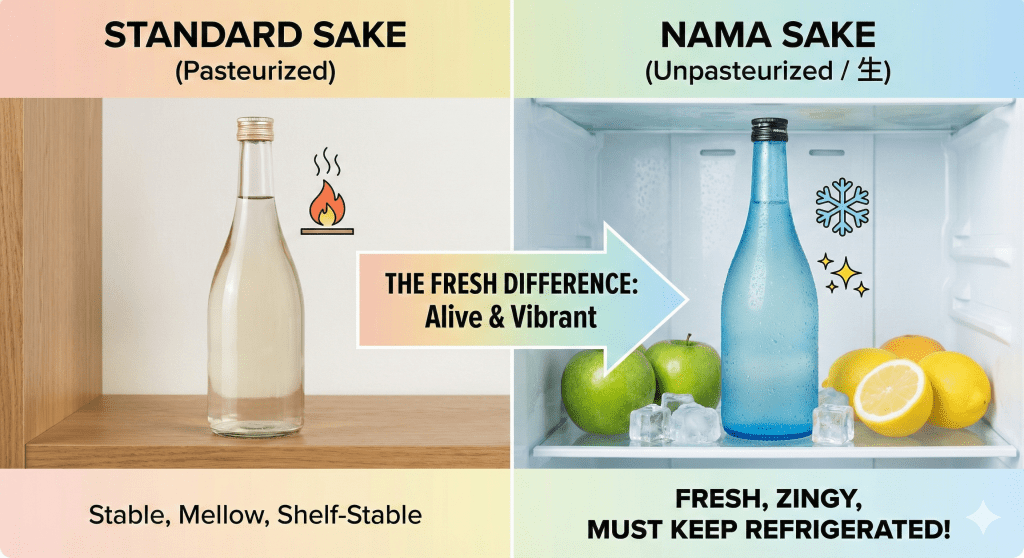
If you look at a sake menu in a premium restaurant or an Izakaya, you will often see the word “Nama” (生) next to certain bottles.
“Nama” literally translates to “raw” or “fresh.” In the context of food, you see it in Nama-biru (Draft Beer) or Nama-chocolate (Ganache). But in the world of sake, Nama Sake refers to Unpasteurized Sake.
To understand why this is special, we first need to look at how standard sake is made.
The Standard Process: Pasteurization
Most sake you find on the shelf is pasteurized twice, once after brewing and once before bottling. This process, called Hi-ire, uses heat to kill off remaining enzymes and bacteria.
- The Benefit: It stabilizes the sake, making it shelf-stable and consistent.
- The Trade-off: Heat can sometimes flatten the bright, zesty, and delicate aromas of the sake.
The Nama Difference
Nama sake skips these heat treatments. It is bottled in its natural, “living” state. Because the enzymes are still active, the sake retains a incredible vibrancy that pasteurized sake often loses.
What does it taste like? Drinking Nama sake is like biting into a fresh fruit compared to eating dried fruit.
- Texture: It often feels “zingy” or slightly effervescent on the tongue.
- Aroma: Punchier, bolder, and fresher. You get intense notes of green apple, pear, melon, or fresh flowers.
- Flavor: It tends to be juicy, expressive, and lively.
The Golden Rule: Keep It Cold!
There is one strict rule for enjoying Nama sake: Refrigeration is mandatory.
Because Nama sake is “alive” with active enzymes, it is very sensitive to heat and sunlight. If you leave a bottle of Nama sake at room temperature, the flavor can change rapidly (and not in a good way!), often developing a smell like nuts or malt.
- Buying Tip: If you see a bottle labeled “Nama” sitting on a warm shelf in a shop, do not buy it. A proper sake shop will always keep Nama sake in the fridge.
Pairing Suggestions
Because of its bold and fresh profile, Nama sake pairs beautifully with:
- Fresh Sashimi: especially white fish or shellfish.
- Light Appetizers: Salads with citrus dressing or fresh mozzarella.
- Spicy Food: The slight sweetness and bold fruitiness of some Nama sakes can balance Thai spice wonderfully.
Next time you see the character 生 on a label, give it a try. It is the closest you can get to tasting sake right out of the brewery tank!
———————————————–
Nama Sake (นามาซาเกะ) คืออะไร? ความจริงที่ “สดใหม่” ของสาเก
หากคุณเปิดเมนูสาเกในร้านอาหารพรีเมียมหรือร้านอิซากายะ คุณมักจะเห็นคำว่า “Nama” (生) เขียนกำกับอยู่ข้างชื่อขวดใช่ไหม?
คำว่า “Nama” แปลตรงตัวว่า “ดิบ” หรือ “สด” ในบริบทของอาหาร เราจะเห็นคำนี้ใน Nama-biru (เบียร์สด) หรือ Nama-chocolate (ช็อกโกแลตสด) แต่ในโลกของสาเก Nama Sake (นามาซาเกะ) หมายถึง สาเกที่ไม่ผ่านการพาสเจอร์ไรซ์
เพื่อให้เข้าใจว่าทำไมมันถึงพิเศษ เราต้องเข้าใจกระบวนการทำสาเกแบบปกติก่อน
กระบวนการปกติ: การพาสเจอร์ไรซ์ (Pasteurization)
สาเกส่วนใหญ่ที่เราเห็นวางขายตามชั้นวางปกติ จะผ่านการพาสเจอร์ไรซ์ (ผ่านความร้อนเพื่อฆ่าเชื้อ) 2 ครั้ง คือครั้งแรกหลังจากหมักเสร็จ และอีกครั้งก่อนบรรจุขวด กระบวนการนี้เรียกว่า ฮิอิเระ (Hi-ire) ซึ่งใช้ความร้อนเพื่อหยุดการทำงานของเอนไซม์และแบคทีเรีย
- ข้อดี: ทำให้รสชาติของสาเก “นิ่ง” เสถียร และเก็บรักษาได้ง่ายที่อุณหภูมิห้อง
- ข้อเสีย: ความร้อนอาจไปลดทอนความหอมและความสดชื่น (Zesty) ตามธรรมชาติของสาเกลงได้
ความต่างของ “นามา” (Nama)
นามาซาเกะ คือสาเกที่ข้ามขั้นตอนการผ่านความร้อนเหล่านี้ไป มันถูกบรรจุขวดในสภาพที่ “ยังตื่นตัว” หรือยังมีความเป็นธรรมชาติอยู่สูง เนื่องจากเอนไซม์ยังคงทำงานอยู่ สาเกชนิดนี้จึงเก็บความสดใส (Vibrancy) เอาไว้ได้ในแบบที่สาเกทั่วไปทำไม่ได้
รสชาติเป็นอย่างไร? เปรียบเทียบง่ายๆ เหมือนการทานผลไม้สด กับผลไม้กวน
- รสสัมผัส: มักจะมีความซ่าเล็กน้อย (Zingy) ที่ปลายลิ้น
- กลิ่น: หอมพุ่ง สดชื่น และชัดเจน เหมือนแอปเปิ้ลเขียว สาลี่ เมล่อน หรือดอกไม้สด
- รสชาติ: มีความฉ่ำ (Juicy) และมีชีวิตชีวามาก
กฎเหล็ก: ต้องเย็นเท่านั้น!
มีกฎข้อเดียวที่สำคัญที่สุดในการดื่มนามาซาเกะคือ: ต้องแช่เย็นตลอดเวลา
เนื่องจากนามาซาเกะยังมีเอนไซม์ที่ทำงานอยู่ มันจึงไวต่อความร้อนและแสงแดดมาก ถ้าคุณวางขวดนามาซาเกะทิ้งไว้ที่อุณหภูมิห้อง รสชาติจะเปลี่ยนไปอย่างรวดเร็ว (ไปในทางที่ไม่ดี) และอาจเกิดกลิ่นแปลกๆ คล้ายถั่วหมักได้
- คำแนะนำในการซื้อ: ถ้าคุณเห็นขวดที่มีคำว่า “Nama” วางอยู่บนชั้นวางธรรมดาที่ไม่ได้แช่ตู้เย็น อย่าซื้อ ร้านขายสาเกที่ดีจะต้องเก็บนามาซาเกะไว้ในตู้เย็นเสมอ
จับคู่กับอาหาร (Pairing)
ด้วยความสดชื่นและรสชาติที่พุ่งพล่าน นามาซาเกะเข้ากันได้ดีมากกับ:
- ซาชิมิสดๆ: โดยเฉพาะปลาเนื้อขาวหรือหอย
- อาหารเรียกน้ำย่อยรสเบา: สลัดน้ำสลัดซิตรัส หรือชีสมอซซาเรลล่าสด
- อาหารรสจัด: ความหวานสดชื่นของผลไม้ในนามาซาเกะบางตัว สามารถตัดรสเผ็ดของอาหารไทยได้ดีเยี่ยมเลย
ครั้งหน้าถ้าเห็นตัวอักษร 生 บนฉลาก ลองสั่งมาดื่มดูนะคะ มันคือรสชาติที่ใกล้เคียงที่สุดกับการตักดื่มจากถังหมักในโรงเลย!
 SAKE SERIES