
[แปลไทยด้านล่าง]
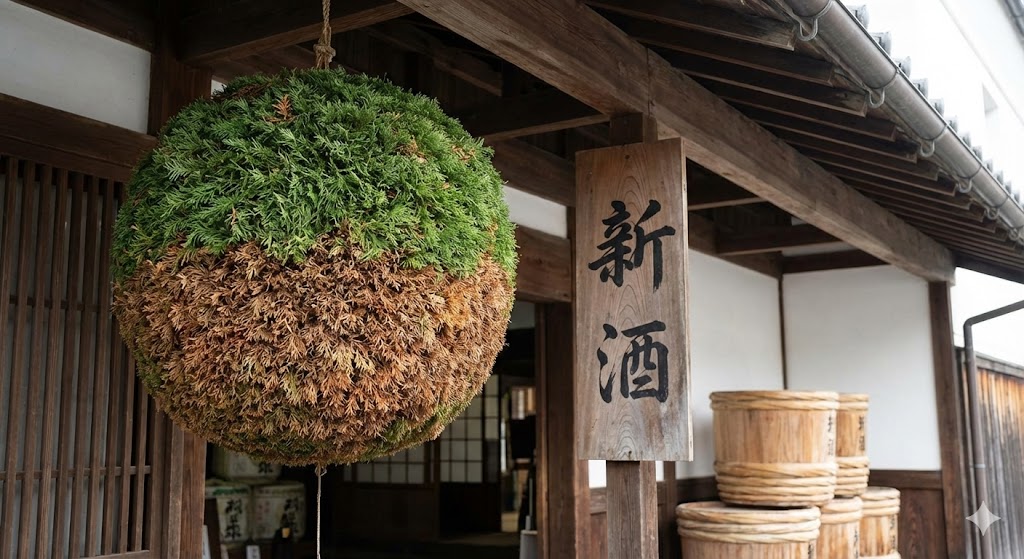
What is that Brown Ball?
If you have ever visited a sake brewery in Japan, or perhaps a traditional Izakaya, you might have noticed a large, bristly ball hanging under the eaves of the roof.
It looks like a beehive or a large plant, but it is actually one of the most poetic symbols in the sake world. It is called a Sugidama (杉玉), or sometimes Sakibayashi.
Nature’s Timer
A Sugidama is made from the tips of cedar branches (Sugi means Cedar, Dama means Ball). But it isn’t just a decoration; it is a visual timer for the community to know the status of the new sake brew.
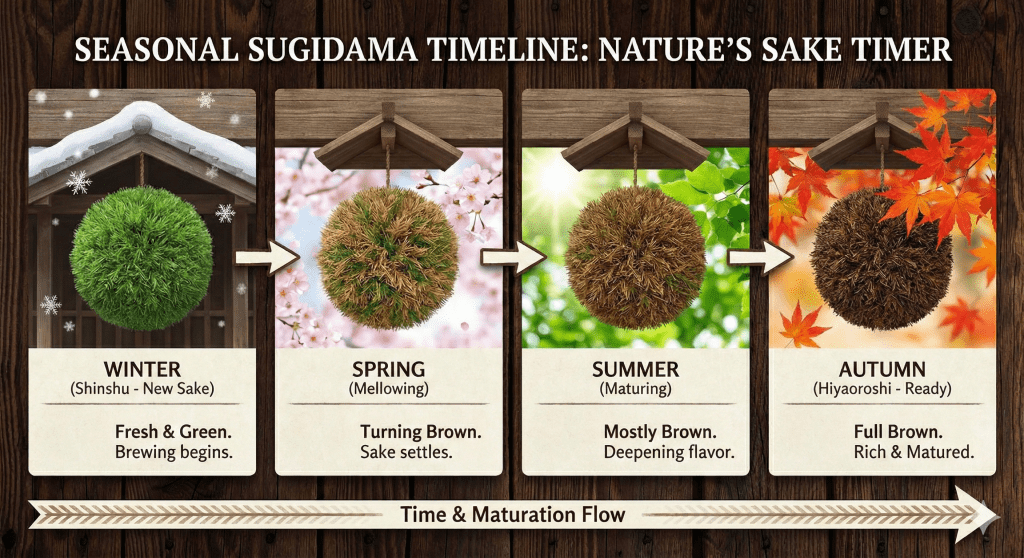
Here is how to read it:
1. The Green Ball (Winter) When a brewery hangs a fresh, bright green Sugidama, it is an announcement to the world: “The new sake (Shinshu) is ready!” It usually appears between November and February, signaling the start of the brewing season and the arrival of fresh, unpasteurized sake.
2. The Turning Brown (Spring to Summer) As the seasons change, the green cedar needles slowly dry out and turn brown. This happens at the same pace that the sake inside the brewery is maturing.
- Light Brown: The sake is settling and mellowing out (Spring).
- Dark Brown: The sake has fully matured and developed its deep, rich flavors (Autumn).
So, when you see a completely brown Sugidama, it tells you that the “Hiyaoroshi” (Autumn Sake) is likely ready to drink.
A Gift to the Gods
The tradition traces back to Omiwa Shrine in Nara Prefecture, which houses the deity of sake. Cedar trees are considered sacred at this shrine. Originally, brewers would hang these cedar balls as a prayer for a safe brewing season and to give thanks to the sake gods for a successful harvest.
Next time you see a Sugidama, look at the color. It will tell you exactly what kind of sake is waiting for you inside.
ซูกิดามะ (Sugidama) คืออะไร? ลูกบอลไม้ซีดาร์หน้าโรงงานสาเกบอกความหมายอะไรกับเรา
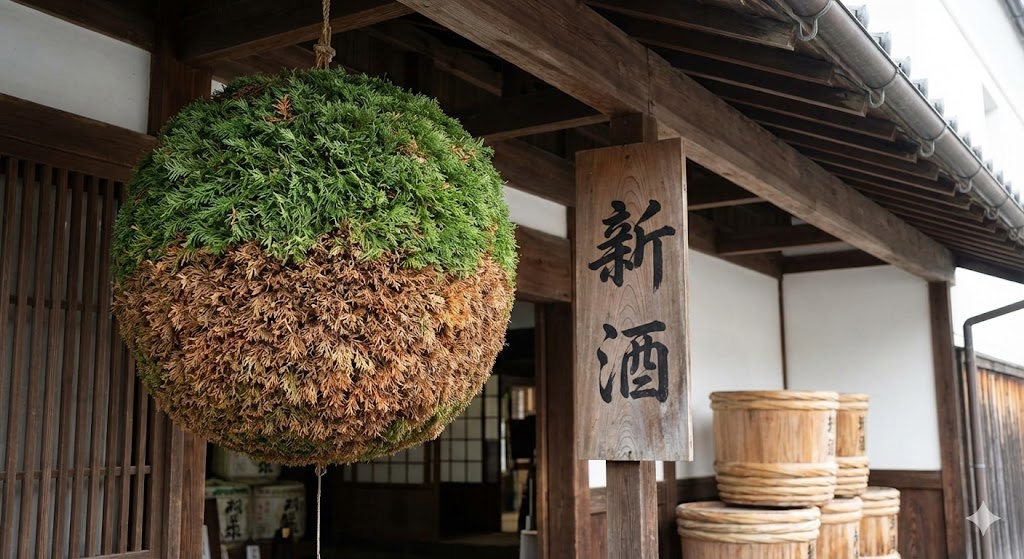
หากใครเคยไปเที่ยวโรงหมักสาเกที่ญี่ปุ่น หรือแม้แต่ร้านอิซากายะแบบดั้งเดิม คุณอาจจะเคยสังเกตเห็น “ลูกบอลกลมๆ” ขนาดใหญ่ที่ทำจากกิ่งไม้ แขวนอยู่ใต้ชายคาหน้าร้าน
หน้าตาของมันอาจจะดูเหมือนรังผึ้งหรือพุ่มไม้แห้งๆ แต่นี่คือสัญลักษณ์ที่มีความหมายลึกซึ้งและโรแมนติกมากในโลกของสาเก สิ่งนี้เรียกว่า “ซูกิดามะ” (Sugidama – 杉玉)
นาฬิกาจับเวลาจากธรรมชาติ
ซูกิดามะ ทำมาจากปลายกิ่งของต้นสนซีดาร์ (Sugi แปลว่า สนซีดาร์ / Dama แปลว่า ลูกบอล) แต่มันไม่ได้ถูกแขวนไว้เพื่อความสวยงามเพียงอย่างเดียว แต่มันทำหน้าที่เป็น “นาฬิกาบอกเวลา” เพื่อส่งสัญญาณให้คนในเมืองรู้ว่าสาเกล็อตใหม่หมักได้ที่หรือยัง
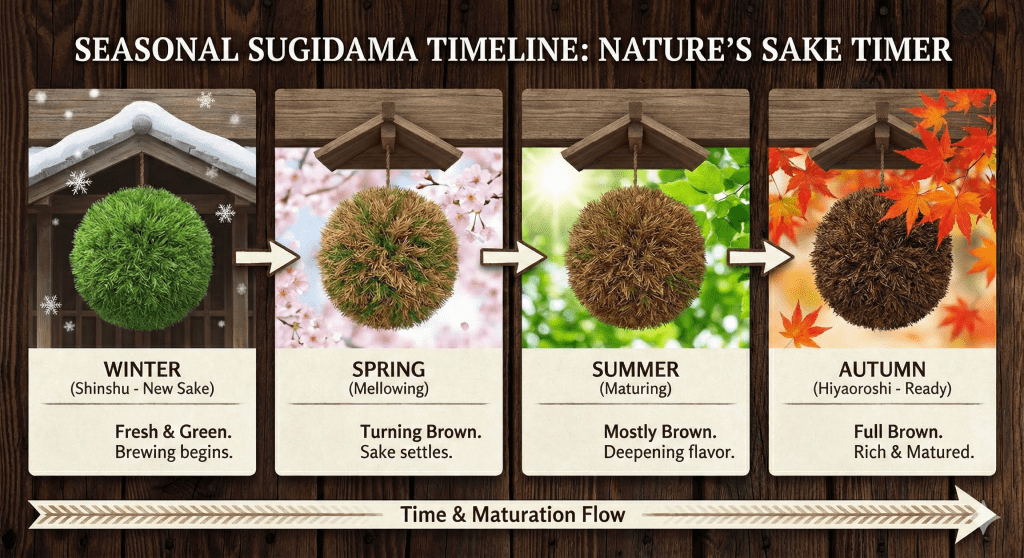
วิธีการดูความหมายของสีซูกิดามะมีดังนี้:
1. ลูกบอลสีเขียวสด (ฤดูหนาว) เมื่อโรงงานแขวนซูกิดามะลูกใหม่ที่เป็นสีเขียวสด นั่นคือการประกาศให้โลกรู้ว่า “สาเกใหม่ (Shinshu) เสร็จพร้อมดื่มแล้ว!” โดยปกติเราจะเห็นสีเขียวนี้ในช่วงเดือนพฤศจิกายนถึงกุมภาพันธ์ ซึ่งเป็นสัญญาณของการเริ่มฤดูกาลผลิตสาเกใหม่ที่สดชื่น
2. ลูกบอลเปลี่ยนเป็นสีน้ำตาล (ฤดูใบไม้ผลิ – ฤดูใบไม้ร่วง) เมื่อฤดูกาลเปลี่ยนผ่าน ใบสนสีเขียวจะค่อยๆ แห้งและเปลี่ยนเป็นสีน้ำตาลอย่างช้าๆ ซึ่งสอดคล้องกับรสชาติของสาเกที่ถูกบ่มอยู่ในถังให้มีความกลมกล่อมขึ้น
- สีน้ำตาลอ่อน: สาเกเริ่มนิ่งและรสชาตินุ่มนวลขึ้น (ช่วงฤดูใบไม้ผลิ)
- สีน้ำตาลเข้ม: สาเกบ่มได้ที่เต็มที่ มีรสชาติเข้มข้น ลึกซึ้ง (ช่วงฤดูใบไม้ร่วง)
ดังนั้น ถ้าคุณเห็นซูกิดามะที่เป็นสีน้ำตาลเข้มทั้งลูก มันกำลังบอกคุณว่าสาเกฤดูใบไม้ร่วง หรือ “ฮิยาโอโรชิ” (Hiyaoroshi) พร้อมเสิร์ฟแล้ว
คำขอบคุณต่อเทพเจ้า
ธรรมเนียมนี้มีต้นกำเนิดมาจาก ศาลเจ้าโอมิวะ (Omiwa Shrine) ในจังหวัดนารา ซึ่งเป็นที่สถิตของเทพเจ้าแห่งสาเก ต้นสนซีดาร์ถือเป็นต้นไม้ศักดิ์สิทธิ์ของศาลเจ้านี้ ในอดีตผู้ผลิตสาเกจะแขวนซูกิดามะเพื่อเป็นการขอพรให้การหมักสาเกในปีนั้นปลอดภัย และเพื่อขอบคุณเทพเจ้าที่ประทานสาเกรสเลิศมาให้นั่นเอง
ครั้งหน้าที่คุณเห็นซูกิดามะ ลองสังเกตสีของมันดูนะคะ มันจะกระซิบตอกคุณได้ทันทีเลยว่า สาเกรสชาติแบบไหนที่กำลังรอคุณอยู่ข้างใน
 SAKE SERIES