
[แปลไทยด้านล่าง]
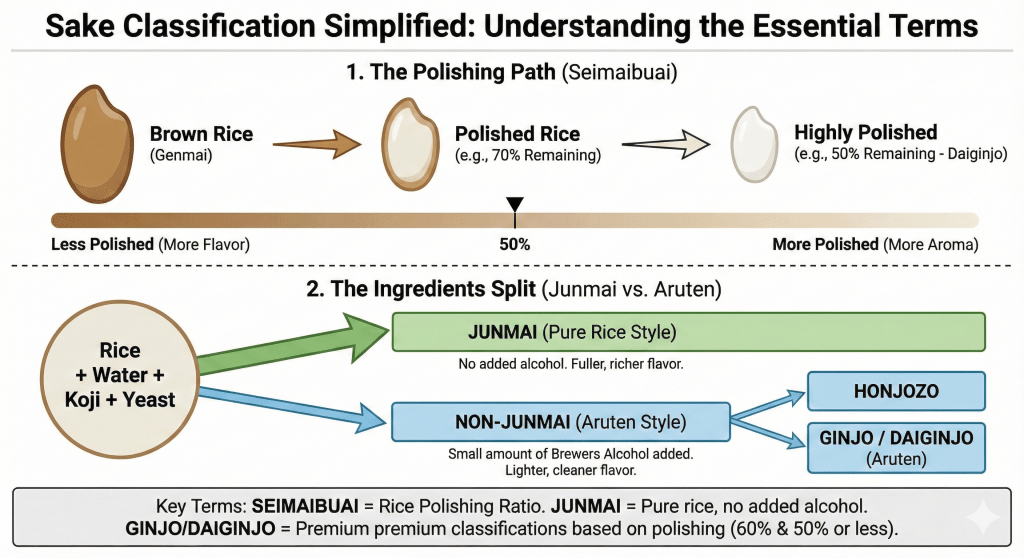
The world of premium sake is primarily classified by two main factors: how much the rice has been polished and whether any extra alcohol was added. Let’s break these down.
สาเกเกรดพรีเมียมในโลกนี้ หลักๆ แล้วจะแบ่งประเภทตามปัจจัยสำคัญ 2 ประการ ได้แก่ ปริมาณที่ข้าวถูกนำไปขัดสี และการมีหรือไม่มีการเติมแอลกอฮอล์เพิ่มเข้าไป เรามาดูรายละเอียดกัน
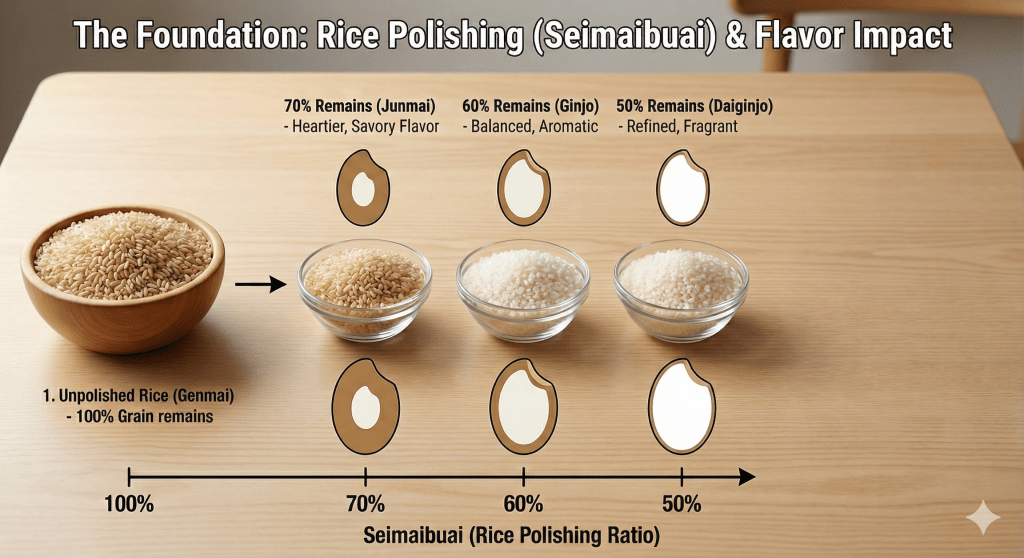
A. The Foundation: Rice Polishing (Seimaibuai)
Before rice becomes sake, it must be polished. The outer layers of a rice grain contain fats and proteins that can create off-flavors. The starchy core is what brewers want for pure, aromatic sake.
- Seimaibuai (精米歩合): This is the Rice Polishing Ratio. The number on the label (e.g., 60%) tells you how much of the rice grain remains after polishing.
- A lower number means more was polished away, resulting in a more refined, fragrant, and premium sake (like a 50% Daiginjo).
- A higher number means less was polished away, often resulting in a heartier, more savory sake with more umami.
A. รากฐานสำคัญ: การขัดสีข้าว (Seimaibuai – เซไมบุไอ)
ก่อนที่ข้าวจะกลายเป็นสาเก จะต้องผ่านกระบวนการขัดสีข้าวเปลือกก่อนค่ะ เนื่องจากชั้นนอกของเมล็ดข้าวจะอุดมไปด้วยไขมันและโปรตีน ซึ่งอาจก่อให้เกิดกลิ่นหรือรสชาติที่ไม่พึงประสงค์ในสาเกได้ ส่วนแกนกลางของเมล็ดข้าวที่เป็นแป้งสตาร์ชนั้น คือสิ่งที่ผู้ผลิตต้องการเพื่อนำมาผลิตสาเกที่มีความบริสุทธิ์และมีกลิ่นหอม
เซไมบุไอ (Seimaibuai – 精米歩合): สิ่งนี้คือ “อัตราส่วนการขัดข้าว” ตัวเลขที่ระบุอยู่บนฉลาก (เช่น 60%) จะบอกให้เราทราบว่ามีปริมาณเมล็ดข้าว คงเหลืออยู่ เท่าไรหลังจากผ่านกระบวนการขัดสีแล้ว
- ยิ่งตัวเลขต่ำ หมายความว่ามีการขัดสีผิวข้าวออกไปมาก ซึ่งจะส่งผลให้ได้สาเกที่มีความประณีต มีกลิ่นหอม และมีความพรีเมียมมากขึ้น (เช่น สาเกระดับไดกินโจ (Daiginjo) ที่มักมีอัตราส่วนนี้อยู่ที่ 50% หรือต่ำกว่า)
- ยิ่งตัวเลขสูง หมายความว่ามีการขัดสีผิวข้าวออกไปน้อยกว่า ซึ่งมักจะทำให้ได้สาเกที่มีรสชาติหนักแน่น เข้มข้น และมีรสอูมามิ (รสกลมกล่อม) ที่ชัดเจนกว่า
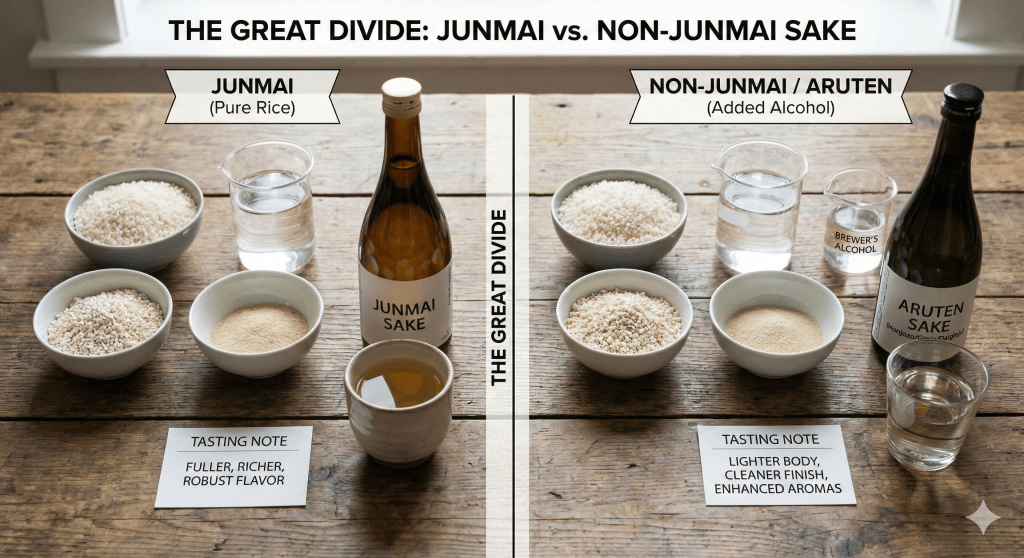
B. The Great Divide: Junmai vs. Non-Junmai
This is the biggest category split. All premium sake falls into one of these two buckets based on its ingredients.
Aruten (アル添) / Non-Junmai: This is sake that has had a small amount of neutral brewer’s alcohol added at the end of fermentation. This is not done to cut costs! It’s a technique used to lighten the body, create a cleaner finish, and enhance aromatic compounds. Honjozo, Ginjo, and Daiginjo can all fall into this category.
Junmai (純米): Literally translates to “Pure Rice.” This means the sake was brewed using only rice, water, koji, and yeast. Nothing else was added. Junmai sake tends to have a fuller, richer, and more robust flavor profile.
B. เส้นแบ่งที่สำคัญ: จุนไม (Junmai) vs. ไม่ใช่จุนไม (Non-Junmai)
นี่คือการแบ่งหมวดหมู่ที่ใหญ่ที่สุด สาเกพรีเมียมทั้งหมดจะถูกจัดอยู่ใน 2 กลุ่มหลักนี้ โดยดูจากวัตถุดิบที่ใช้
- อารุเท็น (Aruten – アル添) / ไม่ใช่จุนไม (Non-Junmai): คือสาเกที่มีการเติม “แอลกอฮอล์กลั่น” (brewer’s alcohol) ในปริมาณเล็กน้อยลงไปในช่วงขั้นตอนสุดท้ายของการหมัก ขอย้ำว่าการทำแบบนี้ ไม่ได้ทำเพื่อลดต้นทุน! แต่มันคือเทคนิคที่ใช้เพื่อให้รสสัมผัสของสาเกเบาลง (lighten the body), ทำให้รสจบ (finish) สะอาดสดชื่น และช่วยดึงกลิ่นหอม (aroma) ให้โดดเด่นขึ้นซึ่งสาเกประเภท ฮอนโจโซ (Honjozo), กินโจ (Ginjo) และ ไดกินโจ (Daiginjo) ล้วนสามารถจัดอยู่ในกลุ่มนี้ได้
- จุนไม (Junmai – 純米): แปลตรงตัวได้ว่า “ข้าวบริสุทธิ์” หมายความว่าสาเกนี้ถูกหมักโดยใช้เพียงแค่ ข้าว, น้ำ, เชื้อราโคจิ และยีสต์ เท่านั้น ไม่มีการเติมสิ่งอื่นใดเพิ่มเข้าไปเลย สาเกจุนไมมักจะมีรสชาติที่เต็มอิ่ม (fuller), เข้มข้น (richer) และหนักแน่น (robust) มากกว่า
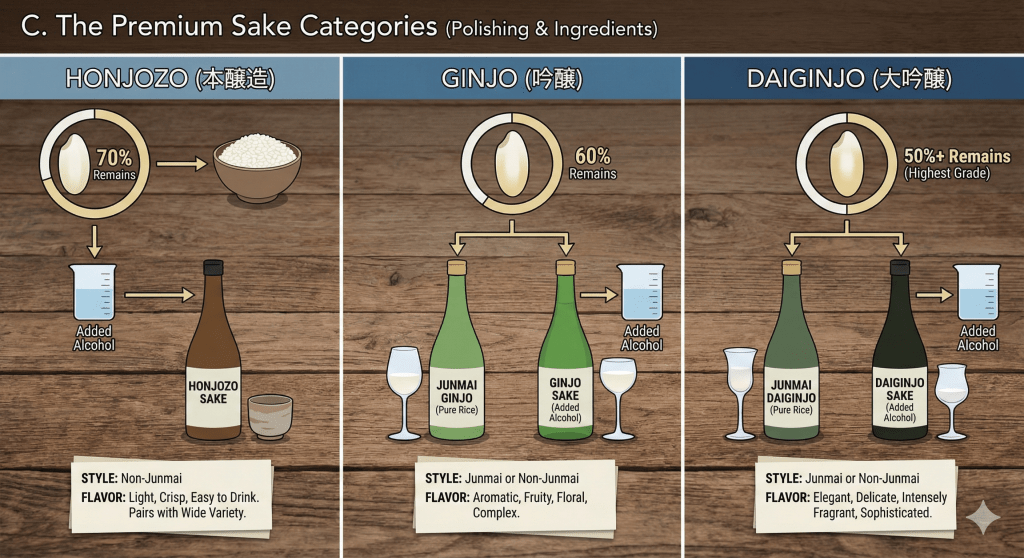
C. The Premium Categories (Putting It All Together)
By combining the polishing ratio and the ingredient split, we get the main premium sake grades you’ll see on a menu.
- Honjozo (本醸造):
- Style: Non-Junmai (has added alcohol).
- Polishing: Rice polished to at least 70% remaining.
- Flavor: Known for being light, crisp, and easy to drink. It’s a great everyday sake that pairs well with a wide variety of foods.
- Ginjo (吟醸):
- Style: Can be either Junmai Ginjo (pure rice) or just Ginjo (has added alcohol).
- Polishing: Rice polished to at least 60% remaining.
- Flavor: Brewed with special techniques to be more aromatic. Expect fruity and floral notes that are lighter and more complex than a standard Junmai or Honjozo.
- Daiginjo (大吟醸):
- Style: The highest grade. Can be Junmai Daiginjo or Daiginjo.
- Polishing: Highly polished rice with at least 50% remaining (often much less!).
- Flavor: The pinnacle of the brewer’s art. These are typically elegant, delicate, and intensely fragrant, with sophisticated fruit and floral aromas. They are best enjoyed chilled on their own or with light dishes.
C. หมวดหมู่พรีเมียม (บทสรุปเมื่อนำปัจจัยมารวมกัน)
เมื่อเรานำเรื่อง “อัตราส่วนการขัดสีข้าว” และ “การแบ่งประเภทตามวัตถุดิบ” มารวมกัน เราก็จะได้เกรดหลักๆ ของสาเกพรีเมียมที่คุณมักจะพบเห็นในเมนู
- ฮอนโจโซ (Honjozo – 本醸造):
- สไตล์: ไม่ใช่จุนไม (Non-Junmai / มีการเติมแอลกอฮอล์)
- การขัดสี: ขัดสีข้าวให้เหลือเนื้อข้าว ไม่เกิน 70%
- รสชาติ: ขึ้นชื่อเรื่องความเบา สดชื่น (crisp) และดื่มง่าย ถือเป็นสาเกที่เหมาะสำหรับการดื่มในทุกๆ วัน (everyday sake) และจับคู่กับอาหารได้หลากหลายประเภท
- กินโจ (Ginjo – 吟醸):
- สไตล์: เป็นได้ทั้ง จุนไม กินโจ (ข้าวล้วน) หรือ กินโจ เฉยๆ (มีการเติมแอลกอฮอล์)
- การขัดสี: ขัดสีข้าวให้เหลือเนื้อข้าว ไม่เกิน 60%
- รสชาติ: หมักด้วยเทคนิคพิเศษเพื่อให้มีกลิ่นหอมโดดเด่น คุณจะได้สัมผัสกับกลิ่นผลไม้และดอกไม้ที่มีความเบาและซับซ้อนกว่าจุนไมหรือฮอนโจโซแบบมาตรฐาน
- ไดกินโจ (Daiginjo – 大吟醸):
- สไตล์: เป็นเกรดสูงสุด เป็นได้ทั้ง จุนไม ไดกินโจ หรือ ไดกินโจ
- การขัดสี: มีการขัดสีข้าวออกไปสูงมาก โดยเหลือเนื้อข้าวเพียง 50% หรือน้อยกว่านั้น (บ่อยครั้งที่เหลือน้อยกว่า 50% มาก!)
- รสชาติ: นี่คือจุดสูงสุดของศิลปะการทำสาเก โดยทั่วไปจะมีรสสัมผัสที่สง่างาม (elegant), ละเอียดอ่อน และมีกลิ่นหอมฟุ้งที่เข้มข้น ทั้งกลิ่นผลไม้และดอกไม้ที่ซับซ้อน เหมาะที่สุดที่จะดื่มแบบแช่เย็นเพียวๆ หรือทานคู่กับอาหารรสเบาๆ
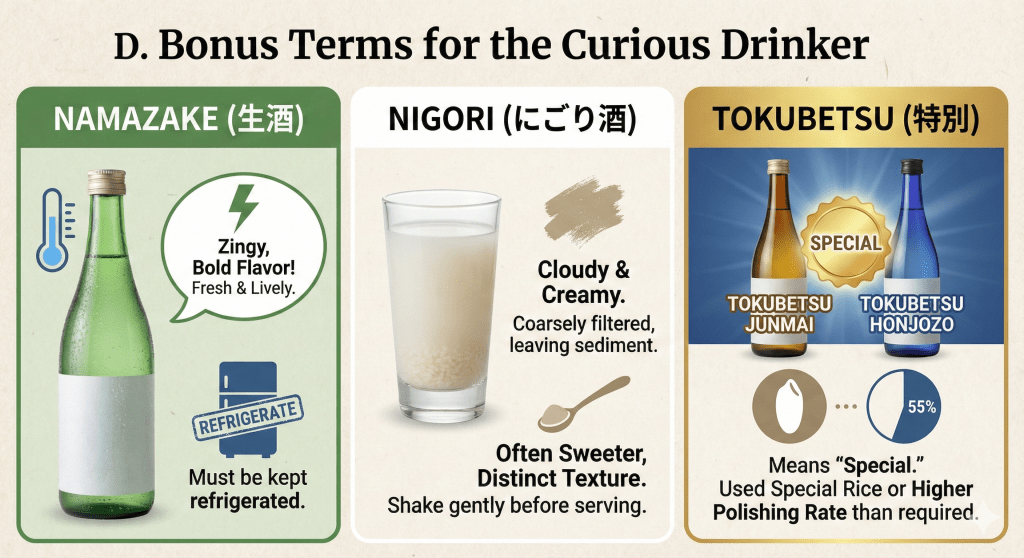
D. Bonus Terms for the Curious Drinker
- Namazake (生酒): Unpasteurized sake. It’s fresh, lively, and often has a zingy, bold flavor. It must be kept refrigerated.
- Nigori (にごり酒): Cloudy sake. It’s coarsely filtered, leaving some rice sediment behind. It’s creamy, often sweeter, and has a distinct texture.
- Tokubetsu (特別): Means “special.” You might see “Tokubetsu Junmai” or “Tokubetsu Honjozo.” It usually means the brewer used a special rice or a higher polishing rate than required for that grade.
D. คำศัพท์น่ารู้เพิ่มเติมสำหรับนักดื่ม
- นามาซาเกะ (Namazake – 生酒): สาเกสดที่ไม่ผ่านการพาสเจอร์ไรซ์ (ไม่ผ่านการฆ่าเชื้อด้วยความร้อน) จึงมีความสดใหม่ มีชีวิตชีวา และมักจะมีรสชาติที่ซาบซ่าและจัดจ้าน (zingy and bold) สาเกประเภทนี้จำเป็นต้องเก็บรักษาไว้ในตู้เย็นตลอดเวลา
- นิโกริ (Nigori – にごり酒): สาเกสีขาวขุ่น เกิดจากการกรองแบบหยาบๆ ทำให้ยังมีตะกอนข้าวหลงเหลืออยู่ รสสัมผัสจะมีความนุ่มนวลเหมือนครีม (creamy) มักจะมีรสหวานกว่าปกติ และมีเนื้อสัมผัส (texture) ที่เป็นเอกลักษณ์เฉพาะตัว
- โทคุเบ็ตสึ (Tokubetsu – 特別): แปลว่า “พิเศษ” คุณอาจจะเคยเห็นคำว่า “Tokubetsu Junmai” หรือ “Tokubetsu Honjozo” บนฉลาก โดยปกติแล้วคำนี้จะหมายความว่าผู้ผลิตใช้ข้าวสายพันธุ์พิเศษ หรือมีการขัดสีข้าวในปริมาณที่มากกว่ามาตรฐานที่กำหนดไว้สำหรับเกรดนั้นๆ เพื่อให้มีความพิเศษยิ่งขึ้น
 SAKE SERIES
Leave a comment