
[แปลไทยด้านล่าง]
Beyond “Rice Wine”: Understanding Sake and its Four Essential Ingredients
While often called “Japanese rice wine,” Sake (Nihonshu) is in a league of its own. It’s not distilled like a spirit, and it’s not fermented from fruit like wine. Instead, sake is brewed more like a beer, but with a unique twist that makes it unlike any other beverage on earth.
The secret lies in its simplicity. This complex, aromatic, and diverse beverage is created from just four primary ingredients. The magic is in how these humble elements are transformed by the skill of the Toji (master brewer).
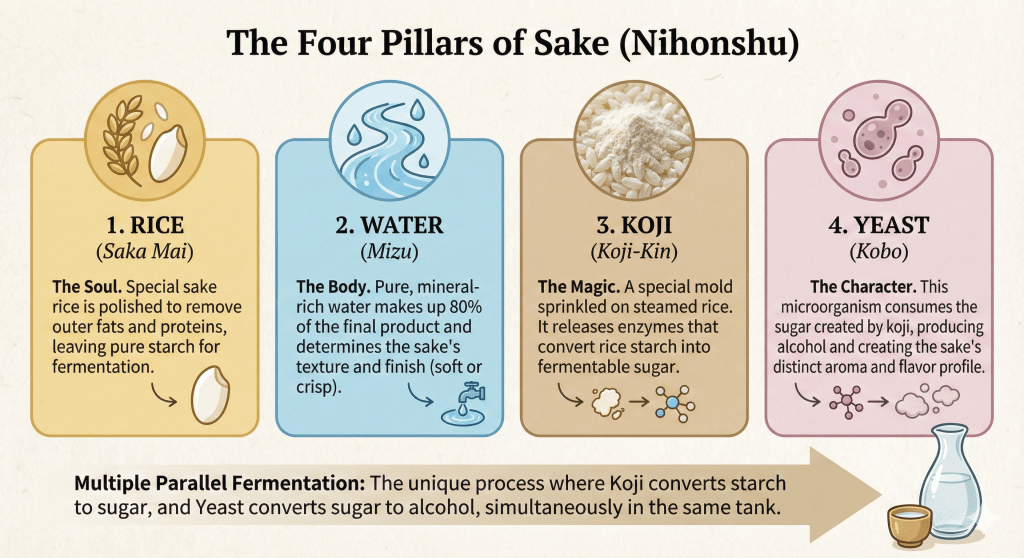
Let’s explore the four pillars that make every cup of sake possible.
1. Rice (Saka Mai) – The Soul
Not just any rice will do. Sake is made from special varieties of rice known as saka mai. These grains are larger, stronger, and have a concentrated starchy core. The outer layers, which contain fats and proteins that can lead to off-flavors, are meticulously polished away. The more the rice is polished, the more refined and aromatic the final sake will be. This polished core is the pure starch that will eventually become sugar, and then alcohol.
2. Water (Mizu) – The Body
Sake is roughly 80% water, so its quality is paramount. Breweries are often established near pristine water sources, like mountain springs or deep wells. The mineral content of the water—whether it’s “soft” or “hard”—directly influences the texture and finish of the sake, contributing to a soft, gentle mouthfeel or a crisp, dry snap.
3. Koji (Koji-Kin) – The Magic
This is the most unique ingredient. Unlike grapes for wine, rice doesn’t contain natural sugars for yeast to ferment. Enter Koji-kin, a benevolent mold spore (Aspergillus oryzae) that is carefully sprinkled onto steamed rice. As the mold grows, it releases enzymes that break down the rice starch into fermentable sugars. Without koji, there would be no sugar, and therefore, no alcohol.
4. Yeast (Kobo) – The Character
Once the koji has created the sugar, yeast takes over. Yeast is a microscopic organism that consumes sugar and converts it into alcohol and carbon dioxide. But it does more than just create alcohol; different yeast strains are responsible for the vast array of aromas you find in sake, from floral and fruity notes like melon and apple to more earthy and umami-rich scents.
เปิดโลกสาเก (Nihonshu): ทำความเข้าใจที่มา และ
4 วัตถุดิบหัวใจสำคัญ
แม้หลายคนจะมักเรียกสาเกว่า “ไวน์ข้าวญี่ปุ่น” แต่แท้จริงแล้ว สาเก หรือเรียกอย่างเป็นทางการว่า นิฮอนชู (Nihonshu) นั้นมีเอกลักษณ์เฉพาะตัวที่แตกต่างออกไป สาเกไม่ได้เกิดจากการกลั่นเหมือนสุราสปิริต และไม่ได้หมักจากน้ำตาลที่มีอยู่แล้วในผลไม้เหมือนไวน์ แต่มีกระบวนการผลิตที่ซับซ้อนและคล้ายคลึงกับการต้มเบียร์มากกว่า
ความมหัศจรรย์ของสาเกซ่อนอยู่ในความเรียบง่าย เครื่องดื่มที่มีกลิ่นหอมซับซ้อน ลุ่มลึก และหลากหลายนี้ เกิดจากวัตถุดิบหลักจากธรรมชาติเพียง 4 ชนิด เท่านั้น ความอร่อยทั้งหมดจึงขึ้นอยู่กับทักษะอันยอดเยี่ยมของ “โทจิ” (Toji – ปรมาจารย์ผู้ปรุงสาเก) ในการแปรเปลี่ยนองค์ประกอบพื้นฐานเหล่านี้ให้กลายเป็นเครื่องดื่มอันเลิศรส
เรามาสำรวจเสาหลักทั้ง 4 ที่ทำให้สาเกทุกแก้วมีความพิเศษกันครับ
1. ข้าว (Saka Mai) – จิตวิญญาณ
ข้าวที่ใช้ทำสาเกไม่ใช่ข้าวอะไรก็ได้ แต่ต้องเป็นข้าวสายพันธุ์พิเศษสำหรับทำสาเกโดยเฉพาะที่เรียกว่า “ซากะไม” (Saka Mai) เมล็ดข้าวเหล่านี้จะใหญ่กว่า แข็งแรงกว่า และมีจุดเด่นคือมี “ใจข้าว” (shinpaku) ที่เป็นแป้งแป้งเข้มข้นอยู่ตรงกลาง เปลือกนอกของข้าวซึ่งมีไขมันและโปรตีนที่อาจทำให้เกิดรสชาติที่ไม่พึงประสงค์จะถูกขัดสีออกไปอย่างพิถีพิถัน ยิ่งขัดข้าวออกไปมากเท่าไหร่ สาเกที่ได้ก็จะยิ่งมีความประณีต สะอาด และหอมหวนมากขึ้นเท่านั้น ใจข้าวที่ถูกขัดจนขาวบริสุทธิ์นี้แหละคือแป้งที่จะถูกเปลี่ยนเป็นน้ำตาลและแอลกอฮอล์ในที่สุด
2. น้ำ (Mizu) – ร่างกาย
สาเกมีน้ำเป็นส่วนประกอบถึงประมาณ 80% ดังนั้นคุณภาพของน้ำจึงมีความสำคัญสูงสุด โรงหมักสาเกส่วนใหญ่มักตั้งอยู่ใกล้แหล่งน้ำบริสุทธิ์ เช่น น้ำแร่จากภูเขา หรือน้ำบาดาลลึก ปริมาณแร่ธาตุในน้ำ ไม่ว่าจะเป็น “น้ำอ่อน” (soft water) หรือ “น้ำกระด้าง” (hard water) ส่งผลโดยตรงต่อเนื้อสัมผัส (texture) และรสสัมผัสช่วงปลาย (finish) ของสาเก ซึ่งเป็นตัวกำหนดว่าสาเกแก้วนั้นจะมีรสนุ่มนวลอ่อนโยน หรือมีรสกระชับแห้งสดชื่น
3. โคจิ (Koji-Kin) – เวทมนตร์
นี่คือวัตถุดิบที่พิเศษที่สุดและเป็นกุญแจสำคัญของสาเก เนื่องจากข้าวไม่มีน้ำตาลตามธรรมชาติเหมือนองุ่นที่ใช้ทำไวน์ ยีสต์จึงไม่สามารถหมักข้าวได้ทันที จึงต้องอาศัย “โคจิคิน” (Koji-kin) ซึ่งเป็นสปอร์ของเชื้อราที่มีประโยชน์ (Aspergillus oryzae) โรยลงบนข้าวที่นึ่งสุกแล้ว เมื่อเชื้อราเติบโต มันจะปล่อยเอนไซม์ออกมาเพื่อย่อยสลายแป้งในข้าวให้กลายเป็นน้ำตาลที่สามารถหมักได้ กล่าวง่ายๆ คือ ถ้าไม่มีโคจิ ก็ไม่มีน้ำตาล และแน่นอนว่าก็ไม่มีแอลกอฮอล์นั่นเอง
4. ยีสต์ (Kobo) – คาแรคเตอร์
เมื่อโคจิทำหน้าที่สร้างน้ำตาลเสร็จแล้ว ก็ถึงเวลาที่ “ยีสต์” (Kobo) จะรับช่วงต่อ ยีสต์เป็นจุลินทรีย์ขนาดเล็กที่ทำหน้าที่กินน้ำตาลและเปลี่ยนให้เป็นแอลกอฮอล์และก๊าซคาร์บอนไดออกไซด์ แต่มันไม่ได้ทำหน้าที่แค่สร้างความเมาเท่านั้น ยีสต์สายพันธุ์ต่างๆ ยังเป็นตัวกำหนดกลิ่นหอมที่เป็นเอกลักษณ์ในสาเก ตั้งแต่กลิ่นหอมสดชื่นของดอกไม้และผลไม้ เช่น เมลอน กล้วย หรือแอปเปิล ไปจนถึงกลิ่นเอิร์ธโทนและรสอูมามิที่เข้มข้นลึกซึ้ง
 SAKE SERIES
Leave a comment